Monthly Archives: September 2009

San Juan Scenic Skyway – Part 4

Telluride – Ridgway

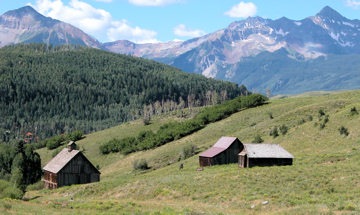
TellurideBarns Near Telluride

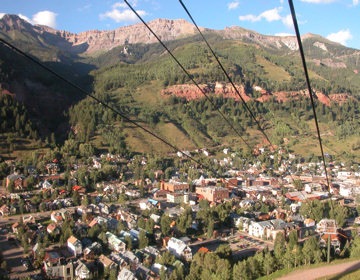
The one time boom town almost became a ghost town before its latest boom as a trendy resort and second home to celebrities. Spa treatments and fine dining or a hike to the brink of Bridal Veil Falls and a microbrew – we can do it all in Telluride. With a reputation as the Festival Capital of Colorado special events continue into autumn as aspens turn gold and cold nights precede the season’s first snowfall.Gondola View of Telluride

Vermillion cliffs cast shadows on the highway and the San Miguel River between Telluride and Placerville. The final segment of the Skyway loop heads back to Ridgway along CO62 with the not to be missed views of Mt. Sneffels. The peak was named after a fictional mountain in Jules Verne’s “Journey to the Center of the Earth.”

The San Juan Skyway doesn’t take us to the center of the earth but gives us an incredible journey through southwestern Colorado.

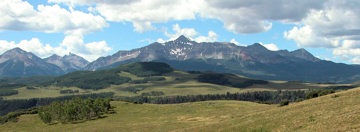
Mountains from Wilson Plateau

  • This post is a portion of an article by Nancy Yackel first published in Buzz in the ‘burbs, a suburban Denver monthly.

Colorado Fall Color – Denver Day Trips

Take to the Hills for Fall Color

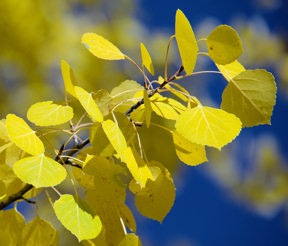
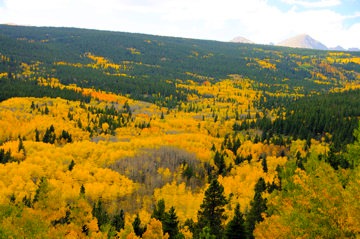
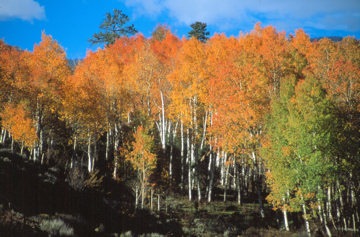
Yellow Aspen Twig Fall arrives early in the Colorado Rockies. Beginning in late August aspen begin their shimmering transformation to golden yellow. Many forecasters predict an early and short color season for 2009. Even residents who rarely travel beyond the Denver metropolitan area plan a fall foliage day trip or Sunday afternoon drive. Consider these routes as you grab the camera and take to the hills.

  • Peak to Peak Aspens Peak to Peak Highway from Blackhawk to Estes ParkThis National Scenic Byway nearly parallels the Continental Divide for 55 miles between Blackhawk and Estes Park. Although it’s a continuous route various segments hold different Colorado State Highway designations 119, 72 and 7 as it travels northward through Rollinsville, Nederland, Ward and Allenspark. Some years the segment between Nederland and Ward offers especially stunning aspen color.
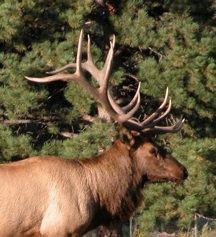
  • Old Fall River Road in Rocky Mountain National ParkA rewarding road less traveled in the park, the one-way (westbound)Old Fall River Road dirt road climbs from Horseshoe Park, west of the RMNP Fall River Entrance Station, to Fall River Pass, 11,796-feet above sea level. Along the ascent the terrain changes from mountain meadow to montane and subalpine forests before reaching the wind-swept alpine world above timberline. Nine of the 11 miles are car passable (except extremely low clearance vehicles) dirt surface – posted speed limit, 15mph. Tight switchback turns make the route  Elk - Head Shot unsuitable for RVs or trailers. In addition to changing aspen you’re almost guaranteed to see grazing elk along the way. A $1 Old Fall River Road guidebook is available at park visitor centers. The road terminates when it intersects with Trail Ridge Road near the Alpine Visitor Center. Turn right to descend the west side of the park to Grand Lake or turn left to follow Trail Ridge Road back to Estes Park.
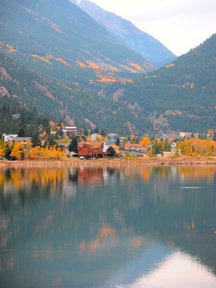
  • I-70 from Empire to the Eisenhower/Johnson Tunnels – Large groves of aspen paint the mountain slopes along this Interstate corridor. Watch for bighorn sheep on the rocky slopes above Georgetown Lake and Silver Plume. Fill the day with exploring the shops and historic sites in GeorgetGeorgetown - Reflectedown or  Silver Plume, take a hike up Herman’s Gulch or ride the narrow gauge Georgetown Loop Railroad. Sample wines at Canyon Wind Cellars or lunch and tea in the Silver Plume Tea Room. Make it an overnight with reservations for dinner and lodging at the Peck House in Empire – the oldest hotel extant in the state. Caution: Eastbound I-70 frequently becomes stop-and-go, bumper-to-bumper on Sunday afternoons during color season. Plan your trip accordingly, consider stopping at a local restaurant for dinner or you may have lots of time to view the same grove of aspen.
Road Closing: The Guanella Pass Road, a frequent destination for leave peepers, between Georgetown and US285 closed August 21, 2009. Heavy summer rains created unsafe conditions due to rock instability. For current information, call 303-569-3251, press “2” for Guanella Pass.
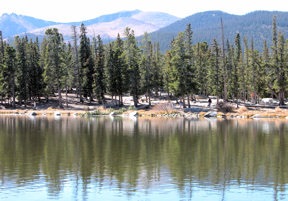
  • Squaw Pass – Bergen Park to Idaho Springs – I don’t find a lot written about Squaw Pass but I think it’s a great Sunday afternoon drive, especially in the fall or on a clear winter day. From the Evergreen Parkway, CO74, head west on Squaw Pass Road, CO103. The road is paved albeit with a few rough and narrow spots along the 18-mile route to Echo Lake. The Squaw Pass Summit at 9,807’  is about half-way to the popular lakEcho Lakee.  A left turn in summer takes gasping visitors to the top of 14,264’ Mount Evans – the country’s highest paved road. CDOT closed the top four miles of the Mt. Evans Highway for the season on September 3, the lower portion remains open as of this posting. Check their website for updates. CO103 continues approximately eight miles down the Chicago Creek Road to Idaho Springs and I-70. Pick a sunny day to fully enjoy the sweeping views of mountain ranges and quaking aspen.

Check Back Soon for Additional Suggestions

  • Kenosha Pass
  • Gold Belt Tour – Florissant to Cripple Creek

Far View Lodge – Mesa Verde National Park, Colorado

Lodging in Mesa Verde National Park

Far View Main Lodge Far View Lodge provides the only accommodations within Mesa Verde National Park. The mesa top motor lodge-style units are open from mid-April to mid-October and are located near the Far View Visitor Center. The 150 rooms feature private balconies with vistas of more than 100 miles.

01 - Far View Lodge


Although I had visited the park several times in different seasons of the year it had always been as a day visitor. On my most recent sojourn I decided to stay overnight in the park while Bob was on a San Juan backpack trip. The experience was so positive we returned for additional nights after he came off the trail. Kiva rooms feature custom handcrafted furniture, pillow-top mattresses, and refrigerators. Rooms do not have televisions.

 Wild Horses As evening falls, the majority of visitors wind back down the mesa to nearby communities. Quiet settles over the park and wildlife make twilight appearances. Deer, rabbits and ground squirrels browse just below our balcony. One evening, a herd of wild horses stop to scavenge supper in the scrubs before galloping across the range.Doorways

Guests enjoy dinner in the lodge’s Metate Room. Menu selections reflect Southwestern cuisine influences. We were delightedly surprised with the quality of food and service – a full moon rising over the  scenic panorama capped the delectable experience.

The mesa top location makes early morning and sunset photos more convenient. During a quiet evening walk around Far View Ruins the Ancestral Puebloans seem not so far away.

Mesa Verde National Park – Colorado

Mesa Verde Mystique


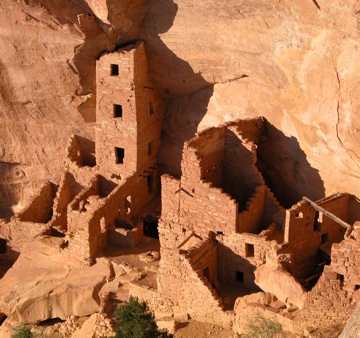
04 - Square Tower House Late afternoon sunlight glints off Square Tower House; the ancient stonework gleams in bronze hued patinas. Tucked beneath Chaplin Mesa in an eroded alcove, walls of the deserted pueblo stand straight and tall centuries after construction. Questions immediately spring to mind: who were these people, why did they leave, where did they go?

Mesa Verde National Park brings the 21st-century visitor face-to-face with the rich remnants of a civilization that thrived a millennium ago in Southwestern Colorado. For more than 100 years archaeologists have excavated, classified and analyzed the treasure trove left behind. As scientific research continues an intriguing story unfolds.
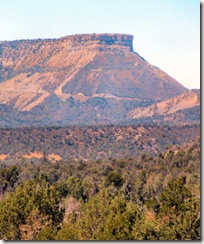
01- Mesa Verde At one time, these people were referred to as Anasazi – a Navajo word sometimes translated as “the ancient enemies” – and were thought to have disappeared after they left the Four Corners region. Evidence shows they traveled south into Arizona and New Mexico. Today, 24 Pueblo Nations regard Mesa Verde as their ancestral home. Respecting their modern descendents, we now refer to them as Ancestral Puebloans.

Mesa Verde visitors face a modern day mystique – how best to experience the park. The choices can be confusing especially for first time tourists. The most famous of the cliff dwellings are found on and around Chapin Mesa, along with park headquarters, museum, visitor center, lodging, restaurants, bookstore and gift shops. Most tourists want to explore at least one of the alcove sites. Only Spruce Tree House and Step House on Wetherill Mesa are available for self-guided tours. Visits to popular Cliff Palace, Balcony House and Long House are by ranger-guided to18 - Long Houseurs only – modestly priced tickets required.

  Far View Visitor Center, 15 miles from the park entrance, is the best orientation stop from mid-April to mid-October. Staff will help plan visits, select the most appropriate tours, and sell the tickets. While all tours involve walking over irregular surfaces and climbing ladders, a Balcony House visit also requires a hands and knees crawl through an 18-inch wide tunnel. Wise choices advised – no one wants to leave Grandma stuck in a tight place or deal with a six-year-old petrified to ascend a 32-foot ladder – unless they’re writing a Chevy Chase “Vacation” sequel.

In response to the inquiry, “How long will it take a person to visit the ruins?” S.E. Osborn answered in 1891, “…it all depends on a person’s curiosity and endurance…” The same holds true today and so much more has been discovered since 1891.

11 - Peek Inside Many visitors opt to join an interpretive guided tour offered through the park concessionaire. The full- and half-day excursions travel via motor coach with a National Park Service trained guide. Visits to sites along Chapin Mesa graphically display the centuries of development from pit houses to the early mesa top pueblo dwellings and finally the cliff dwelling communities. Photographers appreciate the stops at key photo locations. (Personal note – I’m normally a do-it-yourself traveler but truly enjoyed sitting back and listening on this tour. Our guide was a Navajo gentleman from the Four Corners region. The stories and information he shared totally enriched our Mesa Verde experience. Sometimes breaking the mold rewards beyond anticipation.)

West of Chapin Mesa stands Wetherill Mesa – named after the ranching family that first drew national attention to the cliff dwellings as they excavated Cliff Palace. Wetherill contains the second largest concentration of ruins in the park and is open for visitation from Memorial Day Weekend to Labor Day. The 12-mile, 45-minute drive from Far View Visitor Center leaves the crowds behind and promises some of the park’s most scenic vistas. The narrow, winding road is slow but this is time well spent. Smart visitors plan to spend at least a half-day on Wetherill and go prepared with water and snacks or picnic lunch.

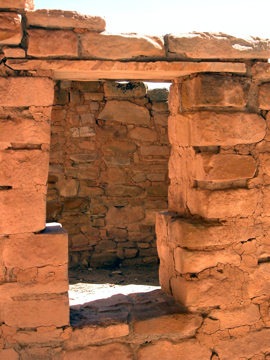
05 - T Doorway Free tram service transports Wetherill Mesa visitors from the parking area to trails and overlooks. The 90-minute Long House tour is considered the most comprehensive ranger-guided visit. Ranger Pat Westover relates, “This is our favorite location, we only get assigned out here about once a week. There’s just as much to see and all the people are over on Chapin.”

Standing below Long House with a sweeping view of the complex, once home to approximately 150 people, Westover sets the scene. “They were living here in the 1200s, about 100 years of occupation. They had no metal, no horses, no wheel, no written language. By 1300 they were gone, Mesa Verde was abandoned.”
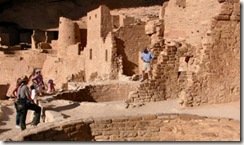
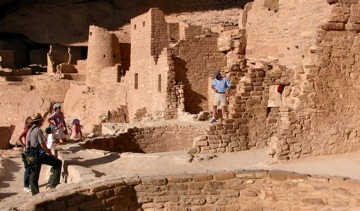
12 - Family at Cliff Palace This site contains 21 kivas, circular chambers used for sacred ceremonies; but, also a place for men to weave and tell stories. Check dams and farming terraces offer strong agricultural evidence. They were farmers; but, also traders. Artifacts of cotton, turquoise, Pacific Ocean shells and Macaw feathers show they had contacts south into Mexico and westward.

The question remains, why did they leave? It was a period of drought; however, they had survived other droughts. Were the soils and timber depleted? Did they face pressure from other groups? Archeologists today believe all of these reasons and possibly others affected the departure. Did the Gods tell them to leave? We will never know all the answers – the whys. That’s part of the mystique.

  • This article by Nancy Yackel was previously published in Buzz in the ‘burbs, a suburban Denver lifestyle magazine.
Colorado Scenic Railroads

Ride the Rails for Colorado Fall Color

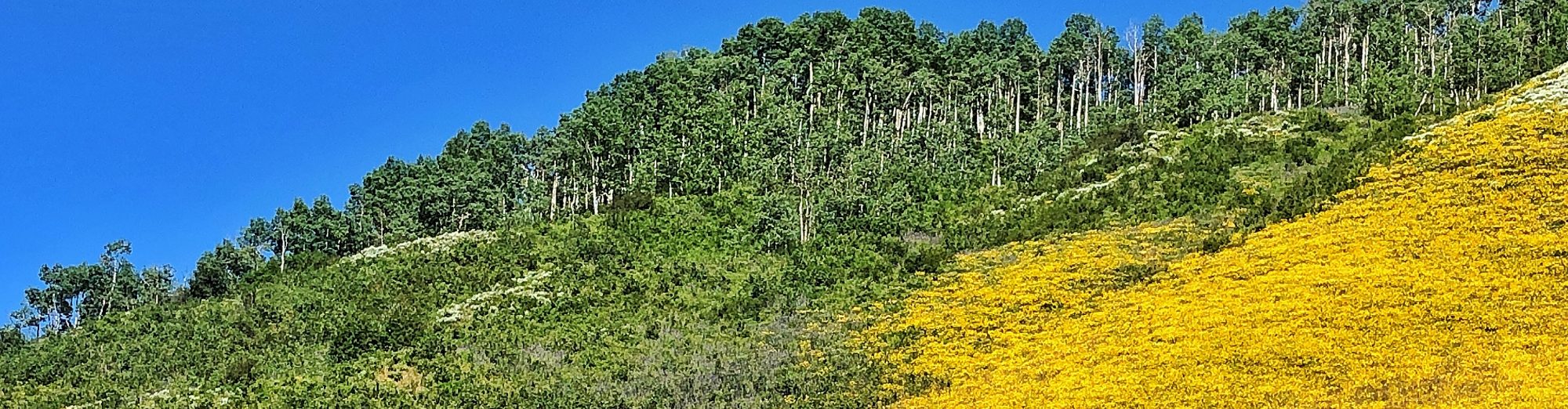
Aspen1 Colorado celebrates autumn with golden hillsides of aspen, scrub oaks in hues from crimson to burnt umber  – and, the occasional dusting of snow on the high peaks. No season is more colorful for a scenic train ride – narrow or standard gauge. Many of the railroads offer special events during the fall. All aboard!

  • Cripple Creek and Victor Narrow Gauge Railroad – A steam powered narrow gauge train makes a 4-mile, 45-minute trip into the historic mining districts of Cripple Creek and Victor. This is an excellent choice for families with young children or those with limited time. Operates daily until mid-October, 10am-5pm, train runs every 40 minutes. Lots of aspens along the route make this a great fall foliage feature. Read more…
  • Cumbres and Toltec Scenic Railroad – This popular excursion weaves along the Colorado/New Mexico border. Special fall events include the Fall Foliage Photo Train on Sept. 27, Galloping Goose Fall Colors Train Oct. 1-4, Chama Moonlight Dinner Train Oct. 2, Fall Foliage Sunday Express Oct. 4 and Chama Steam Fall Classic Oct 24.
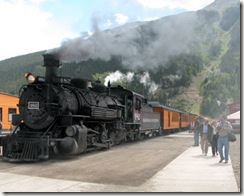
  • DSNGR in Silverton Durango and Silverton Narrow Gauge Railroad – Passengers step back more than a century when they board this historic train that has operated continuously since 1882. The route through Colorado’s San Juan Mountains offers unparalleled scenery. Autumn specials include the 20th Annual Fall Photo Special & Night Photo Shoot Sept. 26-27, Cowboy Poet Train/Durango Cowboy Gathering Oct. 2, Durango Heritage Train Oct. 10, and Peanuts The Great Pumpkin Patch Express Oct. 10, 11, 17, 18, 24, 25 & 31. Reservations a must!
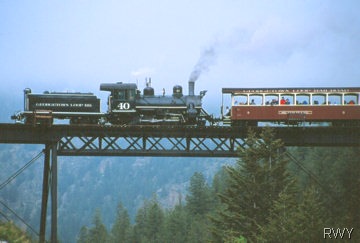
  • Train_Locomotive with Light On Georgetown Loop Railroad – Georgetown and Silver Plume are only two miles apart via highway but the elevation gain of 60o feet required amazing railroad engineering. The steep climb includes many twists, turns and trestles. Trains operate daily through Oct. 12, weekends after that date. Pumpkin Festival events held the first two weekends of October. Read more…
  • Leadville, Colorado and Southern Railroad – Leadville claims title to the highest incorporated town in North America (10,152’) and thrived on mining and the railroads. Rail buffs relive that golden age along the Leadville, Colorado and Southern tracks. Trains run daily through Oct. 4 with a Fall Photo Special Sept. 19. Read more…
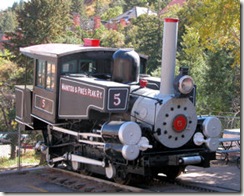
  • Manitou Cog Railway Manitou and Pikes Peak Railway – Scales Pikes Peak on the world’s highest cog railroad. The three-hour round trip to the 14,110’ summit qualifies as the most relaxed climb up the well-known mountain. Swiss diesel locomotives ratchet bright red cars filled with tourists up slopes with grades as high as 25%. Morning and afternoon trips through Oct. 25, thereafter check the website for scheduled departures.
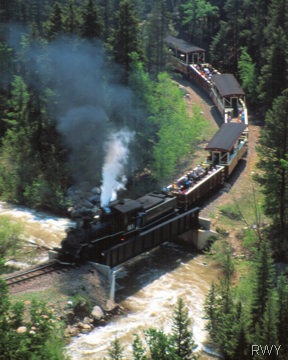
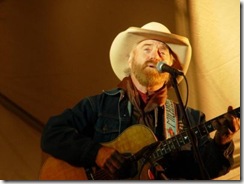
  • Rio Grande Scenic Railway – Departing from Alamosa and LaVeta the Rio Grande Scenic Railway gives passengers multiple trip opMMM - Rio Grandetions (distance, time and price) including a visit to Great Sand Dunes National Park. The autumn schedule includes Rails and Ales Oktoberfest Oct. 3, Fiesta Train Oct. 10 and Pumpkin Patch Ride Oct. 24 and 31. A combined rail adventure and Michael Martin Murphey’s Mountain Music Show occurs September 19.
  • Royal Gorge Route – Travels along the banks of the Arkansas River and beneath the worlds highest suspension bridge, more than 1,000-ft. above the gorge. Passengers can select seating in coach or vista dome cars, both with access to an open air car for outstanding views and photos. The Royal Gorge Route offers Colorado’s only rolling gourmet dinner service. Oktoberfest Lunch special trains run Sept. 18-20, Sept 25-27, Oct. 2-4. Read more…

Also consider:

  • Amtrak – Passenger service between Chicago and the West Coast traverses the Colorado Rockies west of Denver. The route through the Moffat Tunnel, Grand County and along the Colorado River offers superb scenery. Trips from Denver to Glenwood Springs  or Grand Junction offer getaways without driving busy I-70. Nancy’s Caveat – One shouldn’t have a tight schedule when traveling via Amtrak, delays can and do occur – especially east bound trains.
  • Tiny Town  In the foothills just off US285, Tiny Town attracts the pre-school set to the oldest kid-sized village and railroad in the United States. The miniature railroad, powered by coal-fired locomotives, loops through the village of more than 100 buildings and along the hillsides of Turkey Creek Canyon. After riding the train, investigate the 1/6-scale structures handcrafted by volunteers; be sure to peek into windows and skylights. A playground and picnic area encourages families to linger. Open weekends, 10am-5pm, during September.

Georgetown Loop Railroad – Colorado

Georgetown Loop Railroad

Train_Over View_Geo.Town The most convenient scenic railroad for Denver area residents also stands as one of the state’s great engineering feats. The historic narrow gauge Georgetown Loop recreates the dramatic climb from Georgetown to Silver Plume, both established as important silver mining regions in the 1860s.

Success of the mines depended on reliable rail lines between Denver and the mining camps. By 1877, a route was completed through Golden and Idaho Springs to Georgetown. There, engineers and construction crews faced a daunting challenge. Silver Plume, just two miles away, was 600-feet higher in elevation – up a narrow, steep canyon. The resulting six-percent grade would prove too great for most locomotives.

The solution included more than four miles of track and multiple bridges including the Devil’s Gate High Bridge rising 95-feet above Clear Creek. The first passenger train arrived in Silver Plume in April 1884, beginning a boom in tourism for one-day excursions from Denver. Abandoned by the late 1930s, the track and bridges were dismantled.

Train_George Town3.pgThe Colorado Historical Society, assisted by a major grant from the Boettcher Foundation, spent more than ten years reconstructing the roadbed, laying track and rebuilding the Devil’s Gate High Bridge. Dedication of the new facilities occurred 100 years after the original completion.

Today an oil-powered steam locomotive exhales deep, throaty chugs as it pulls passenger cars up the scenic canyon. Soon the rhythm recalls the children’s book words, “I think I can, I think I can, I think I can.” Trainman, Ron Ruhoff, willingly answers questions and interprets whistle signals; three toots for going backwards, a long and a short when approaching a trestle.

During the summer months, until Labor Day, a tour of the Lebanon Silver Mine offers an added attraction. Accessible only by train, the guided underground excursion conveys tales of hard rock miners’ difficult lives.

*Article by Nancy Yackel, first published in Buzz in the ‘burbs, a suburban Denver monthly lifestyle magazine.

Cripple Creek and Victor Narrow Gauge Railroad – Colorado

Cripple Creek and Victor Railroad

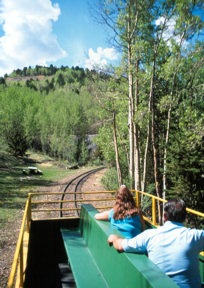
As soon as the conductor calls, “All aboard,” waiting passengers eagerly make their seat selections on the Cripple Creek and Victor Narrow Gauge Railroad. Some head towards the front car to observe the crew shoveling coal into the steam engine while others are drawn to the rear to watch the receding rails. The popularity of open or closed cars depends on weather conditions. Choose wisely, there is no way to move between cars durTrain_Open Caring the 45-minute trip.

  The train follows the old Midland-Terminal roadbed, crosses a reconstructed trestle and passes gold mine sites with lively histories. Stands of aspen frame postcard worthy views of the Sangre de Cristo Mountains.

On an uphill grade the train slows to a mere crawl before restoking provides a burst of steam power accented by pillaring black smoke. Passengers may encounter soot or tiny coal embers; wearing white is not a wise choice.

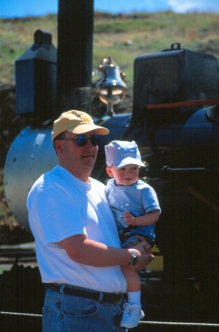
Narration along the route relates a time when the rich Cripple Creek and Victor gold mining districts supported a population of nearly 50,000 and served as the economic and social hub of the region. At the turn of the 20th century ladies from Colorado Springs rode the Midland train to Cripple Creek in order to shop for the latest fashions. The May Company opened their second department store here during those boom days.Train_Father & Child

Long draws on the steam whistle demonstrate how Echo Valley earned its name. Numerous reverberations work their way down valley with each toot.

Returning to Cripple Creek passengers find a gift shop filled with railroad themed items, including lots of ‘Thomas the Tank’ gear, and an array of local history books. Next door, check out the Cripple Creek District Museum in the original Midland-Terminal Depot.

The 4-mile round trip aboard the colorful Cripple Creek & Victor Narrow Gauge Railroad is a great choice for families with small children or adults with short attention spans. Plentiful aspen groves add autumn color and photographic highlights.

*Article by Nancy Yackel, first published in Buzz in the ‘burbs, a suburban Denver monthly lifestyle magazine.

Leadville, Colorado & Southern Railroad – Colorado

Leadville, Colorado & Southern Railroad

Fifteen minutes after leaving the Leadville depot the debris of civilization disappears and tall white aspen trunks support a golden canopy above the Leadville, Colorado and Southern train. The Continental Divide and Colorado’s highest mountains cap the westward vista.

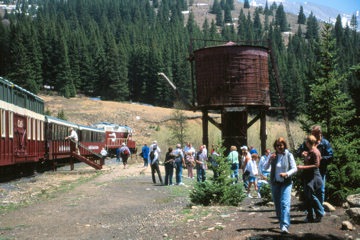
Train_Water Tower_Leadville “Tickets,” calls Liz as she enters each car of the standard gauge, diesel-powered train. The gregarious conductor is in her 13th year welcoming passengers to the scenic trip towards Fremont Pass. Rows of seats run the length of the cars providing unobstructed viewing. From one side riders watch the headwaters of the Arkansas River snake through the valley below; while, those on the other side scan the hillside for marmots, deer and trickling waterfalls.

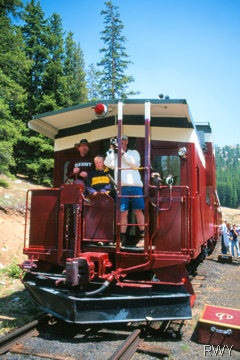
A 15-minute stop at the French Gulch Water Tank allows passengers to investigate nearby French Creek, take photographs or check out the historic 47,500-gallon water tank. The crew opens the caboose for inspection and encourages climbing into the cupola.

Train_Caboose The once traditional last car of freight trains has become a rarity. The Leadville, Colorado & Southern not only uses a caboose, they allow two riders (for an additional fee) on the return trip into Leadville. Relaxed in leather armchairs high in the cupola, caboose passengers travel at tree top level with unparalleled views of the train and route ahead. This unique experience makes a great gift for rail buffs or to share with a grandchild. Reserve caboose rides when you make reservations. Also inquire about rides in the locomotive.

*Article by Nancy Yackel, first published in Buzz in the ‘burbs, a suburban Denver monthly lifestyle magazine.

Royal Gorge Route – Colorado

Royal Gorge Route

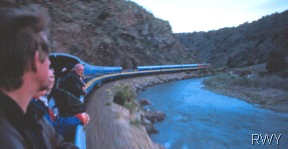
Rail travel and one of Colorado’s most popular destinations combine for an outstanding adventure. The Royal Gorge Route threads through the famous canyon 1,000 feet below the world’s highest suspension bridge. Twisting along the banks of the Arkansas River, trips aboard this train promise close-up views of the Arkansas River, wildlife and sheer granite walls. Two-hour trips depart from the historic Santa Fe Depot in Cañon City; traveling 12 miles to Parkdale before reversing direction.

A stop on Hanging Bridge highlights each trip; the canyon narrows at this point so much that the rails are suspended over the river. During the season, passengers watch rafters tackle the surging waters of Class V rapids. Views upward include a swath of Colorado sky and the thin ribbon of the Royal Gorge Bridge linking perpendicular canyon walls.

Train_Open - RGR The streamline train consists of restored climate controlled coaches and roofless observation cars. The Sunshine Falls café and bar car satisfies hunger pangs. The Theodore Roosevelt dining car debuted on the route this summer, adding an upgrade option.

During day trips First Class seating at comfortable tables includes a class of complimentary champagne or sparkling cider, chef’s choice of hor’s dourves and a cash bar. A local Cañon City company re-outfitted the Via Rail car in rich wood paneling, sparkling light fixtures and burgundy upholstery.

Train_All Abord For Colorado’s classiest rail trip make reservations on the Saturday night Twilight Dinner Train, offered through Oct.25th. Upon boarding, guests find an appetizer plate and champagne at their table. A chilled salad topped with homemade Bleu cheese dressing and crisp croutons is served soon after departure. Between courses diners step out to an observation car for sunset photos or stars sprinkled across the night sky canvas.

Entrée choices are salmon with herbed wild rice and fresh vegetable or a generous roast prime rib served with baked potato and vegetables. Chocolate cake or cheesecake desserts and coffee conclude the four-course meal from chef Donovan McDonald and cheerful staff.

The Royal Gorge Route continues operations on weekends during the winter and spring months, a boost to off-season tourists and residents.


*Article by Nancy Yackel, first published September 2003 in Buzz in the ‘burbs, a suburban Denver monthly lifestyle magazine. Menu details, personnel and dates may have changed, check the Royal Gorge Route website for current details.