Seeing Stars – The Solar System and Beyond
Delight with a Lowell Observatory visit replaced the previous week’s disappointment at the Whipple (see blog) Visitor C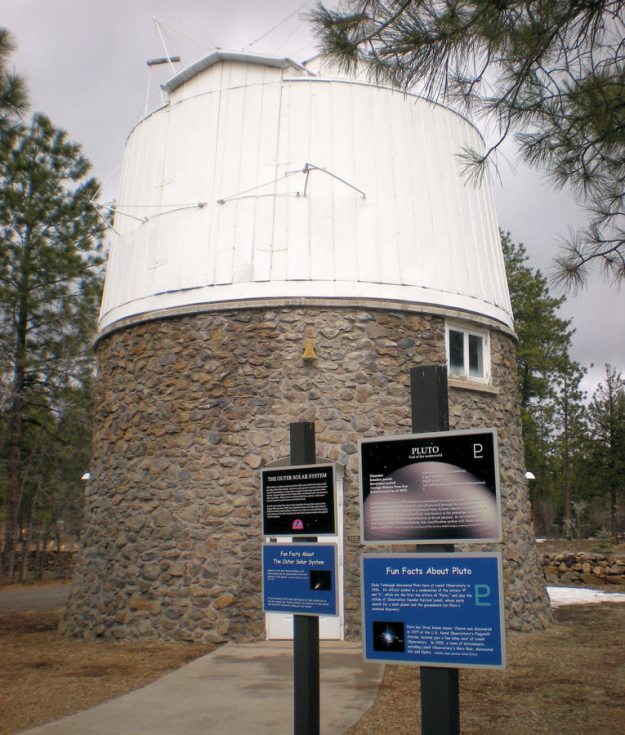 enter. Monday morning brought clouds and a soft rain to Sedona, the things we had planned to do were outdoor activities. We decide to drive up Oak Creek Canyon to Flagstaff for a couple of indoor attractions.
The Lowell Observatory campus caps Mars Hill immediately west of Flagstaff. The facility offers an interesting mix of historic and futuristic astronomy, public educational programs and scientific research.
We arrive at the Lowell Observatory Steele Visitor Center a few minutes before the beginning of the hourly tour. The “Discovery at Lowell Observatory” show in the digital space theatre, relates Lowell’s distinguished history, discovery of Pluto and current research and observations including Kuiper Belt objects in t he outer solar system. A guide leads the tour group through the campus to the dome housing the historic 24″ Alvan Clark refractor telescope. Percival Lowell spent a great deal of time observing Mars from this scope in the early 1900s. Evening programs allow public viewing of night skies – weather dependent, or course.
The official tour ends with a visit to the Rotunda Museum, a depository for historic artifacts and astronomy displays including the story of how Flagstaff was selected as the observatory’s home and a hands-on exhibit for children. We choose to take the Pluto Walk to the dome where Pluto was first discovered in 1930 by Clyde Tombaugh. Markers along the path denote planets of our solar system with fun facts, distances between “planets” are in scale.
 Back in the Visitor Center we spend time in the interactive Discover the Universe hall. Exhibits cover from how the eye sees to the order of planets from the sun. Attractive, informative and well maintained the exhibits are in direct contrast to what we found at Whipple the week prior. A multimedia show “Lowell Observatory: A New Century of Discovery” in the Giclas auditorium reports on the construction of the 4.2-meter Discovery Channel Telescope. Because the sun was a no show on this day we did not get to view the star through the special-filtered solar filtered, an activity usually available from 9:30-9:55am. Before departing Bob spent time selecting a book in the gift shop while I canvassed the staff for lunch recommendations.
 Significant because of the 400th anniversary of Gaileo first pointing a telescope skyward, 2009 has been designated the International Year of Astronomy. Lowell Observatory will offer special programs and exhibits throughout the year.
Flagstaff wasn’t originally on our agenda for this trip. The rain created change of plans opened the opportunity for an educational day of new experiences. By the time we returned to Sedona in late afternoon the sun made intermittent appearances. We visited Red Rocks Crossing and Bell Rock before the sunset ritual on Airport Mesa. A richly rewarding day because of plan B – even though we didn’t originally have one.
When You Go: Lowell Obsevatory Visitor Center is open daily except for major holidays. Hours March through October are 9am – 5 pm, November through February Noon – 5pm. Evening hours are Monday through Saturday 5:30 – 10pm June, July and August, Monday/Wednesday/Friday/Saturday 5:30 – 9:30pm September through May. Reservations are not required nor accepted for public programs.
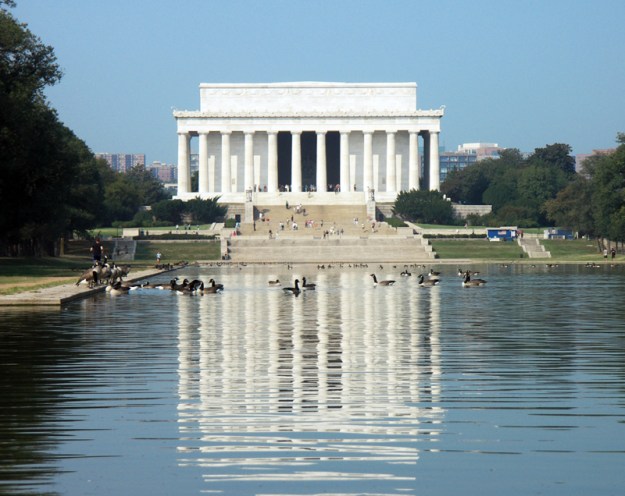 Lincoln’s New Salem
 Historic tours of Denver’s venerable Brown Palace Hotel focus on “Affairs of the Heart” during February. Oh, the tales Debra Faulkner, hotel historian and archivist, has to tell. After 117 years the “Brown” reveals stories of intrigue, romance, love triangles and even murder. Public tours are offered every Wednesday and Saturday at 2pm and last 45-60 minutes. Tours are free, however
  I suggest making reservations for Afternoon Tea following your tour. Served in the eight-story atrium lobby the traditional afternoon ritual includes tea sandwiches, scones with Devonshire cream shipped directly from England and tea pastries. All accompanied by a harpist or pianist.
  The
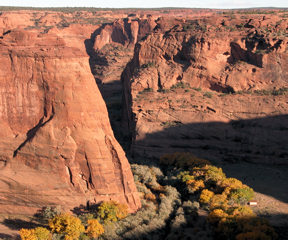
The  Tours are led by knowledgeable Navajo guides driving six-wheel drive vehicles. Half-day tours take visitors into the lower halves of Canyon de Chelly and Canyon del Muerto, the two canyons which comprise Canyon de Chelly National Monument.
 Thunderbird Lodge provides group tours and is the only lodging facility within Canyon de Chelly National Monument. The lodge is located on the site of a trading post built around the turn of the 20th century.
  Where To Go - Travel USA