America’s First Archaeological Reserve
Arizona’s 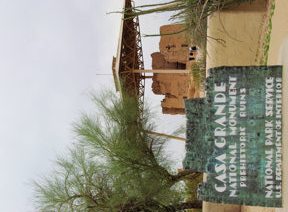 Casa Grande National Monument preserves the remains of structures built by the Hohokam people in the 1300s. In the Gila River Valley these ancient people built over 1,000 miles of irrigation canals, successfully growing corn, beans, squash, cotton and tobacco. Today several Native American tribes believe they have ancestral links to the Hohokam. The O’odham people of Southern Arizona still use the ruins for ceremonials and special events.
Spanish missionary, Father Kino, rode through the valley in 1694 and refered to the deserted structure as Casa Grande, or Great House, in his records. The site became the nation’s first archeological reserve in 1892 – the fifth oldest unit in the National Park system. Casa Grande was designated a National Monument in 1918.
We watch a 15-minute film and browse the compact but informative museum relating background on the Hohokam people and Casa Grande before taking the short walk out to the ruins. The largest structure – four stories and 11 rooms – has a metal roof protecting the ancient walls from weather damage. Signs along the self-guided path relate informative details.
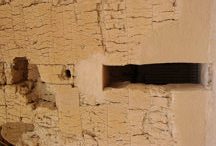 Unlike most of the ruins we see in the Southwest Casa Grande was not built with stone or adobe bricks. Caliche is a concrete-like hardpan found several feet below the surface in this region. The Hohokam mixed ground-up calice wth water to procude a sticky mud for building walls, sealing roofs and plastering walls.
No one knows why the unusual structure was built or how it was used – center of government, education, religion or trade are speculations. I’m fascinated with how architectual details signify astronomical occurances. A small circular window in the west wall aligns with the setting sun on the summer solstice. A square hole in an upper wall aligns once every 18.5 years with the setting moon at an extreme point in its cycle. Additional windows and doorways align with the sun or moon at significant times of the year. Was this an observatory? We believe the Hohokam devised a calendar based on the motions of the sun and moon and incorportated that calendar into their architecture. Did it relate to their crops and farming?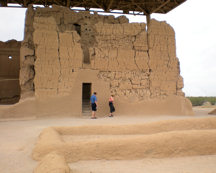
Casa Grande was part of a much larger community. Excavated walls and unearthed mounds indicate several compounds comprised of houses, work areas, courtyards and storage rooms. In the center of the compound an oval ballcourt was used for community activities.
We don’t know the reasons Casa Grande was abandoned – disease, drought, flood, social or political issues. By 1450 the Hohokam culture, that had lasted 1,000 years, had come to an end. Today agriculture is still key to the region; irrigated 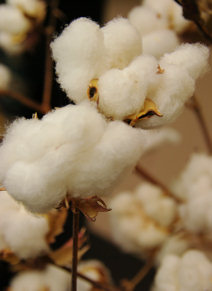 fields support Arizona’s cotton industry. Standing in the shadow of the ancient walls and gazing across wind-blown fields one is almost transported into a world as the Hohokam knew it.
When You Go: Casa Grande National Monument is open 8am-5pm every day of the year except Thanksgiving and Christmas. The monument is located in Coolidge, Arizona about an hour’s drive from both Phoenix and Tucson.
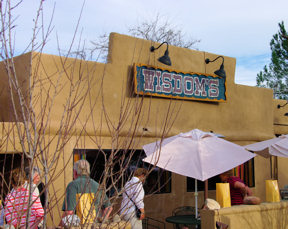
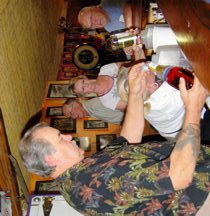 We’re lucky to grab a couple of seats at the bar where owner/family patriarch, Herb, sets up a steady stream of drinks. I start on a margarita served in a pint glass fruit jar. Before long I’m in conversation with two ladies from Green Valley (20+ miles north), they’re absolutely rapturous discussing Wisdom’s menu. They tell me Tuesdays are 2-for-1 margarita night and you need to get in line 20-30 minutes before opening.
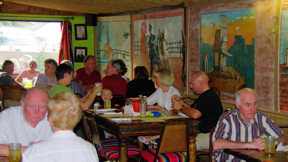 We decide on one cherry burrito – split in half with a scoop of ice cream for each of us. Bob selects the bacon wrapped shrimp served with salsa, guacamole, sour cream, tortillas, rice and beans. I want to try a half-dozen items but settle on a chile relleno, turkey enchilada, rice and beans. Food arrives hot, tempting and oh so good. No wonder people drive for miles to eat at Wisdom’s. Our dinner partners introduce us to Herb’s granddaughter, Sasha. I’m guessing she’s about 10 years old and already a charmer.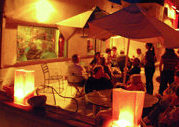
 er completing all 18 they receive a “Treasure” from one of the two gift shops.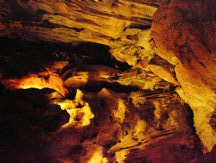
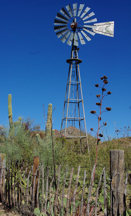 lly protected and used for research.
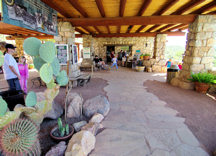
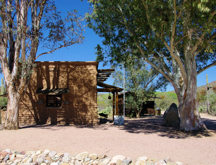 The Civilian Conservation Corps were largely responsible for development of Colossal Cave Mountain Park in the 1930s. The adobe CCC office building has been renovated, housing a museum recalling their efforts and the men who served. From developing the tour route through the cave to the limestone buildings and ramadas the CCC deserves great credit.
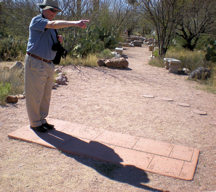 nt Hohokam Indian culture to modern cave research. I was most intrigued with the Analemmatic Sundial which I renamed the human sundial. The horizontal calendar grip is unlike any sundial I’ve ever seen. I tried to get Bob to stand still long enough to serve as the gnomon (vertical rod).
 When You Go:
 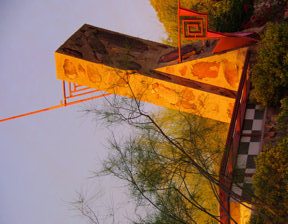 Frank Lloyd Wright created
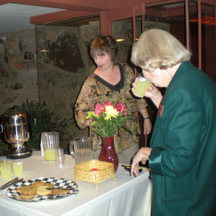
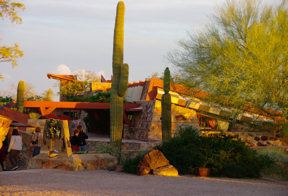 After stopping in the bedroom wing the group partakes of tea, lemonade and cookies in an alcove outside of the dining room. Wind prohibits the fire-breathing dragon from staying lit but an outdoor corner fireplace nips the slight chill in the air. The tour concludes with visits to the Kiva, Cabaret Theater and Music Pavilion.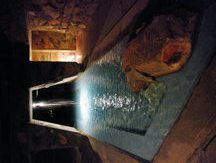
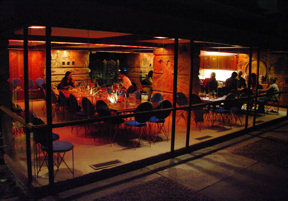
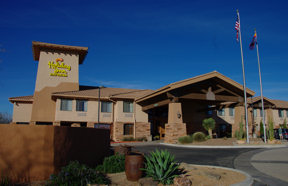
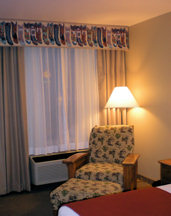 From the warm cookies at check-in to the specially selected carpet and materials in a tasteful Southwest theme there’s been attention paid to detail throughout the hotel. I love the cowboy boot fabric covering the valance. In the bathroom we find not only the obligatory bath mat but also a sparkling white throw rug – perfect for bare feet in front of the sink. New flat-screen televisions are wall mounted. A wood cabinet holds the microwave and mini-frig; they’re not just plopped in an available space as an afterthought.
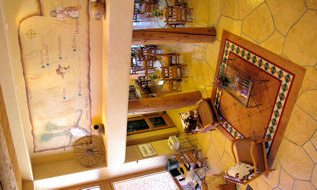 The lobby is a large lovely space with stone fireplace and deep cushy chairs. The breakfast area is not large enough to accommodate the number of guests wishing to eat at one time. It wouldn’t be quite as eye pleasing but adding some tables would increase convenience and comfort. One of the problems is that a fair percentage of the guests are retirees (at least during winter months) who tend to have little morning agenda other than socializing and the crossword. They claim a table and sip coffee for the duration. I understand the hotel can’t ask them to move along but more space and tables are needed for a successful breakfast buffet experience.
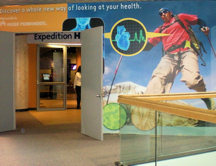 Upon entering the exhibit each person receives a Peak Pass, a plastic card activated with a few personal statistics. The computer may ask for age but it doesn’t get into the “w” word – weight. As one moves through the 20 activity stations you insert the card so that your information is added as it measures and compares. At “Your Heart’s Electricity” we grip a bar which generates an electrocardiogram and learn how the ups and downs on the EKG graph represent the activity and
 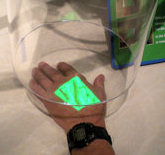 electricity of different chambers of the heart. “BioRide” takes us on a virtual bicycle ride through the Rocky Mountains with personal target heart rates and pulse measurements. “Blood Flow” illuminates the blood vessels in our hand and forearm and what happens when we press on a vessel and relieve the pressure.
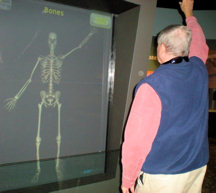 “Full Body Viewer” is sure to be constantly busy. As you approach the projection screen a skeleton appears, It mirrors your movements as you squat, wave, reach and turn. With touch controls other body systems replace the skeleton: the nervous and endocrine systems, the circulatory and respiratory system and the musculature.
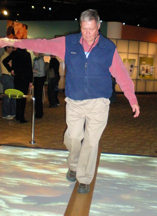 length, speed measurements and how much energy was used. Data is recorded on our Peak Pass and printed out on our Personal Profile before we exit. The learning continues at home, with the number on our printout we can enter a website and access our personal information and additional activities.
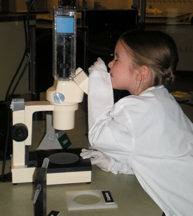 Lab coats, gloves and safety goggles gets us prepared for “Biology Base Camp,” an authentic laboratory. Using research equipment visitors test different antibacterial products on live bacteria, extract DNA and determine the sugar content of various breakfast cereals. Staff tells us that youngsters as young as five succeed with their experiments with some parental guidance. Yet, we as adults found the experiments of interest. This promises to be a popular stop along the Expedition Health journey.
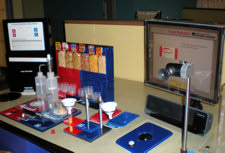 pedition.
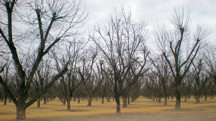 owned business. “Estate grown” means Stahmann’s grow all of their own pecans, never buying from other sources. Acres and acres of orchards receive irrigation from the Rio Grande. From tree to packaging each step is carefully controlled. For instance, Stahmann Farms stopped using chemical insecticides in the late 1980s. Instead, thousands of ladybugs, lacewing flies and natural predators control the harmful green and black aphids.
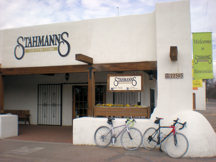 On our last trip through Las Cruces I discovered the Stahmann store on the historic plaza of Old Mesilla. A couple of tins of cinnamon spice pecans went home with us. Bob swears he doesn’t remember any of this, he’s sure I devoured them all myself? This time we purchase a half-dozen tins, roasted & salted, cinnamon spice and mild chile dusted. We resist the temptation of pralines, pecan brittle, white chocolate pecans and a dozen more tantalizing treats. I do make sure we tuck a catalog into the bag, making a mental note of their gift packages and assortments the next time I need special presents.
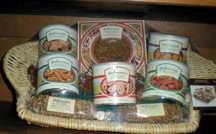 Before leaving we treat ourselves to the richest, creamiest pecan praline ice cream cone I’ve ever enjoyed. And, I’ve tried quite a few in my years. There’s something totally decadent with indulging in such a treat at 10:15 in the morning.
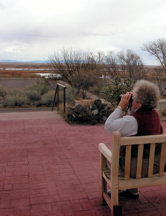
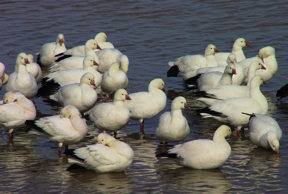 Armed with bird books and binoculars we approach
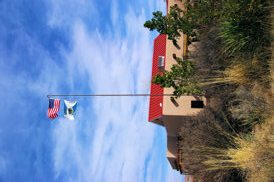
 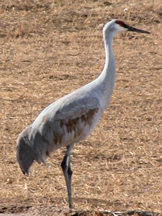 We start our visit with a picnic lunch in the pavilion near the visitor center. Before heading out for the driving tour we purchase a CD ($2.50) of interpretive information coordinated with numbered signs along the route. The Bosque Nature Store carries a large selection of birding and nature books plus gift items.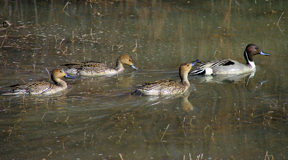
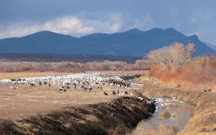
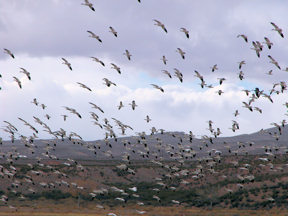 The prominent sighting on this trip was hundreds and hundreds of snow geese. They’re quite a sight when they all decide to go airborne. I always wish we had more time here and vow next time we’ll sit and bask in the winter sun much like the turtle on the log watching the ducks drift pass.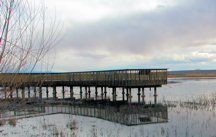
 Where To Go - Travel USA