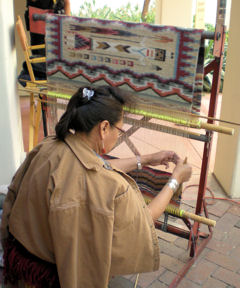
52nd Indian Fair & Market
Heard Museum – Phoenix
March 6 & 7, 2010
One of the country’s premier Indian fairs and markets attracts collectors to the Heard Museum grounds in downtown Phoenix the first weekend of March.
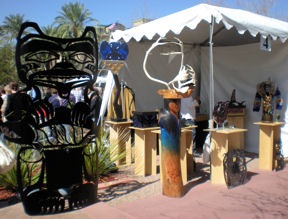
More than 700 Native American artists display a vast array of original arts and crafts.
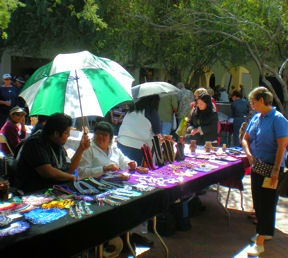
* Beadwork
* Carvings
* Jewelry
* Paintings
* Pottery
* Rugs
* Sculpture
* Textiles
The artisans come from all over America, not just Arizona. To participate each artist must be jurored into the show, a prestigious acknowledgement of the quality of their work.
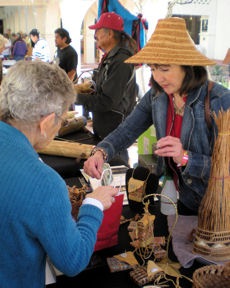
A basket weaver from the Pacific Northwest Coast creations represent traditional woven items of the region.
While Southwest Indian art is well represented. Tribal members from around the country exhibit contemporary and traditional art forms.
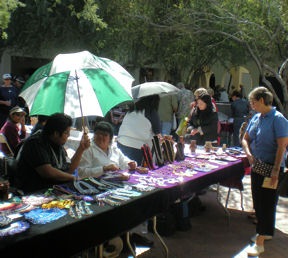
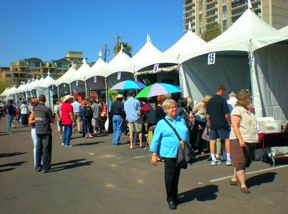
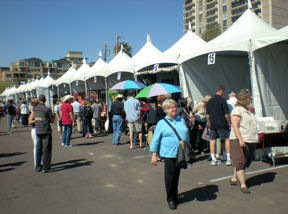 Rows and rows of booths and large exhibit tents gives each artist individual space to display their work. Whether one is a serious collector or just looking for an inexpensive keepsake shoppers get to met the person who created their chosen purchase.
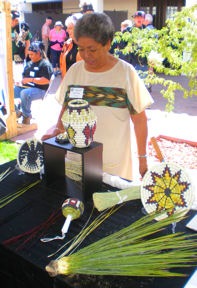
The green yucca plant is an important material for Hopi basket makers. This Hopi artist was happy to explain the process from gathering the natural materials to finished product.
The more we learn the more we appreciate the time, talent and skill involved in creating each piece. Many of the traditional designs have been passed down through several generations. Artists often say they first learned from their grandmothers.
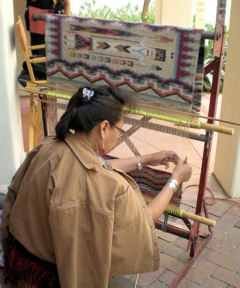
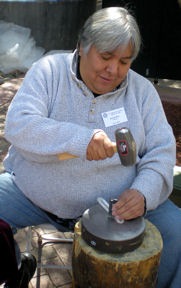 Throughout the weekend artist demonstrations let us view the creative process. Whether it’s working a flat piece of silver into a lovely necklace or transforming a lump of clay into a pottery figurine shoppers enjoy watching the artists at
 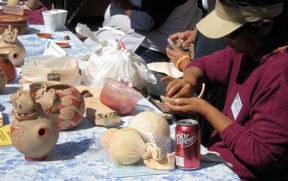 work.
work.
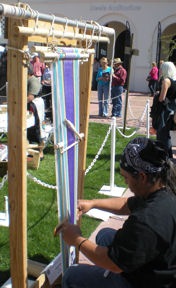 Questions are willingly answered. As we talk with the artists we witness an unique balance of modesty and pride in their art form.
Music, including R. Carlos Nakai, and dance performances give attendees a break from shopping. There is so much to take in we find it helpful to switch focus from time to time.
Each year a different tribal group is featured, the Hopi in 2009 and bands of the Apache people in 2010. “Apache Peoples and Arts” will highlight elder artists, food, a wikieup (traditional Apache lodging), and storytelling by Apache entertainer Ken Duncan.
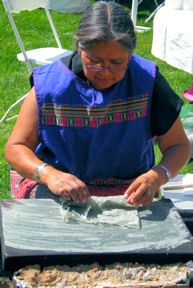
What would an event be without food? Not to worry, there are plenty of opportunities to nosh our way through the day. Of course, there is traditional Indian fry bread. We fascinated to watch the Hopi piki maker. Piki is a thin rolled bread made with fine blue corn flour and culinary ash. The maker spreads a thin layer of the batter on a hot griddle with her hand. Almost immediately the practically transparent layer of piki is ready to be rolled. Watching the labor intensive steps we understand why this is a rare treat.
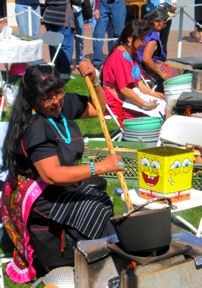
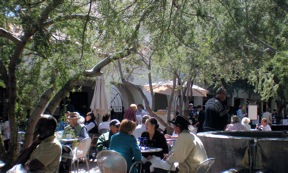
Apache acorn soup will be available in 2010 as well as selections ranging from Cajun and Mexican specialties to gelato. Tables in the tree shaded courtyard are the perfect place for people watching as we have lunch.
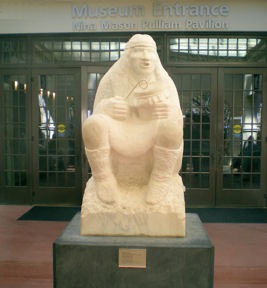
Indian Fair tickets include admission to the ten galleries of the Heard Museum. However, we found so much to do and see at the Fair & Market that the museum had to wait for another day.
Gates swing open for general admission both Saturday and Sunday from 9:30am – 5pm.




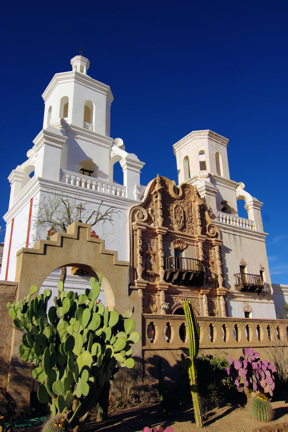
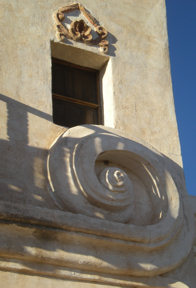
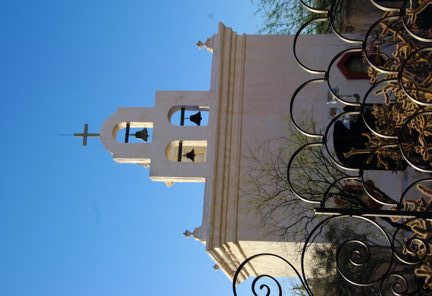
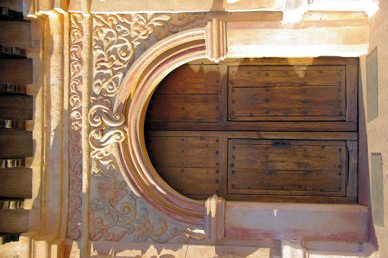
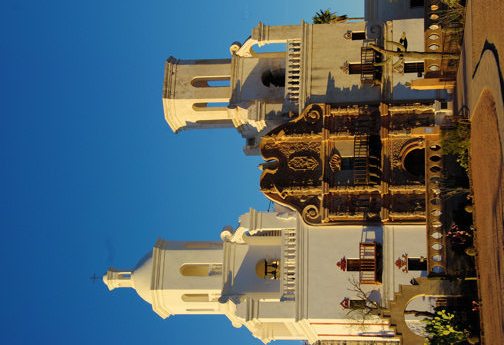
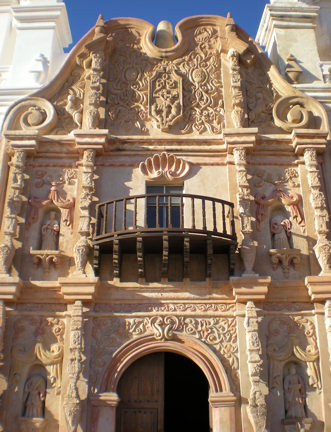 Built from 1783 – 1797, the church frequently is proclaimed to be the finest example of mission architecture in the United States. Records reveal little about the architect and artisans responsible for the original construction. Influences of Moorish, Byzantine and Late Mexican Renaissance architecture blend to create the strikingly unique edifice. We can only surmise why the east tower was never completed.
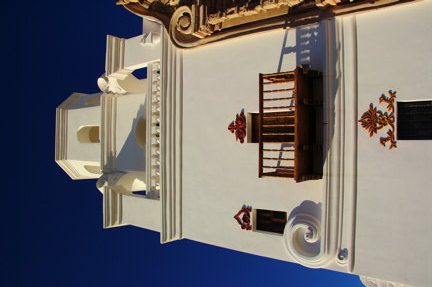 The building has a long history of respectful care followed by neglect and restoration. For three decades in the 1800s priests were sent home to Spain. Parishioners safeguarded church furnishings in their homes but the building fell into disuse.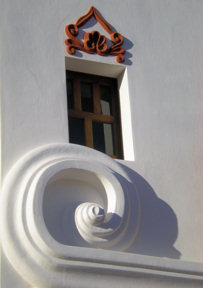
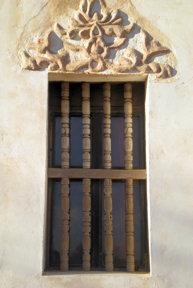
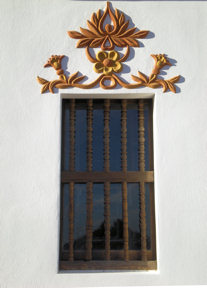
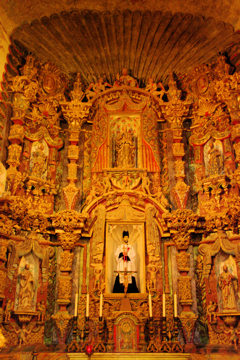
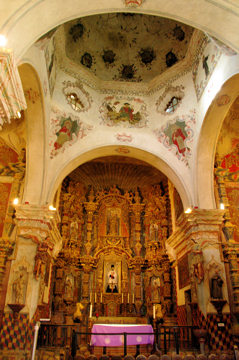 We sometimes hear the gasps of wonder as visitors step into the church for the first time. Every surface seems to resonate with color: altars, statuary, arches, retablos, frescoes, carvings. Some have called this the "Sistine Chapel of North America." It’s quite a compilation of baroque and folk art. Whether one says a prayer and lights a candle or sits quietly observing the features this is a time to pause and contemplate.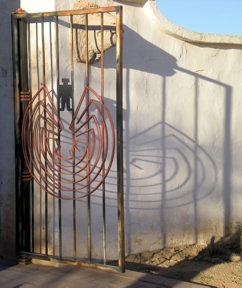

 UA Visitor Center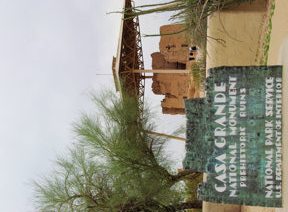
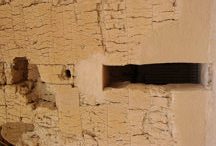 Unlike most of the ruins we see in the Southwest Casa Grande was not built with stone or adobe bricks. Caliche is a concrete-like hardpan found several feet below the surface in this region. The Hohokam mixed ground-up calice wth water to procude a sticky mud for building walls, sealing roofs and plastering walls.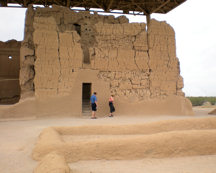
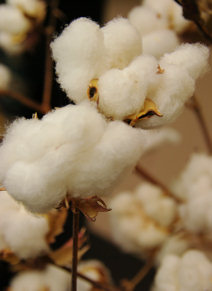 fields support Arizona’s cotton industry. Standing in the shadow of the ancient walls and gazing across wind-blown fields one is almost transported into a world as the Hohokam knew it.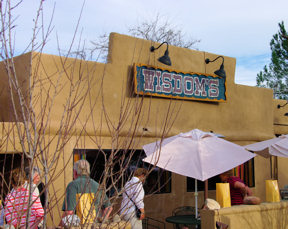
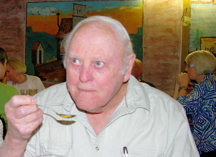
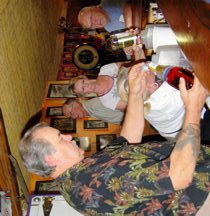 We’re lucky to grab a couple of seats at the bar where owner/family patriarch, Herb, sets up a steady stream of drinks. I start on a margarita served in a pint glass fruit jar. Before long I’m in conversation with two ladies from Green Valley (20+ miles north), they’re absolutely rapturous discussing Wisdom’s menu. They tell me Tuesdays are 2-for-1 margarita night and you need to get in line 20-30 minutes before opening.
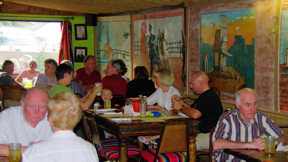 We decide on one cherry burrito – split in half with a scoop of ice cream for each of us. Bob selects the bacon wrapped shrimp served with salsa, guacamole, sour cream, tortillas, rice and beans. I want to try a half-dozen items but settle on a chile relleno, turkey enchilada, rice and beans. Food arrives hot, tempting and oh so good. No wonder people drive for miles to eat at Wisdom’s. Our dinner partners introduce us to Herb’s granddaughter, Sasha. I’m guessing she’s about 10 years old and already a charmer.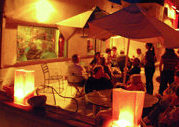
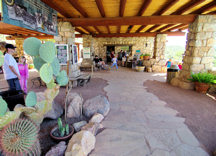 er completing all 18 they receive a “Treasure” from one of the two gift shops.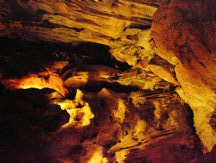
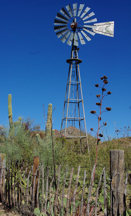 lly protected and used for research.
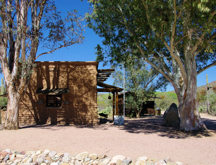 The Civilian Conservation Corps were largely responsible for development of Colossal Cave Mountain Park in the 1930s. The adobe CCC office building has been renovated, housing a museum recalling their efforts and the men who served. From developing the tour route through the cave to the limestone buildings and ramadas the CCC deserves great credit.
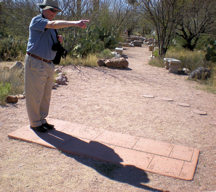 nt Hohokam Indian culture to modern cave research. I was most intrigued with the Analemmatic Sundial which I renamed the human sundial. The horizontal calendar grip is unlike any sundial I’ve ever seen. I tried to get Bob to stand still long enough to serve as the gnomon (vertical rod).
 When You Go:
  Where To Go - Travel USA