White Dove of the Desert
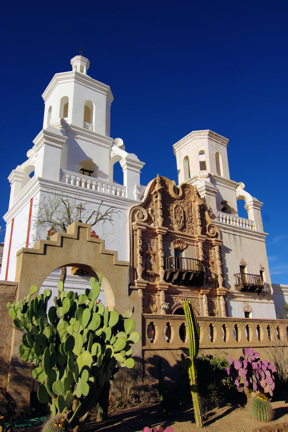
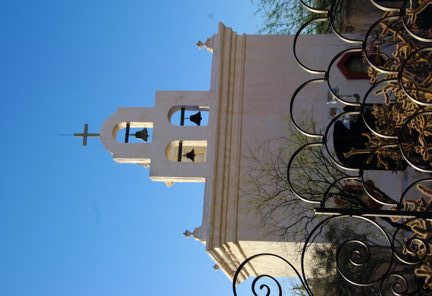
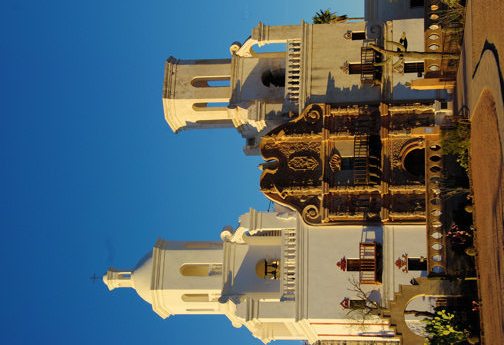
Renovated and unveiled San Xavier del Bac Mission glistens in the Sonora Desert, south of Tucson. For the first time in years no scaffolding obscured the front or west tower of the famed, "White Dove of the Desert."
On our previous visits the mission was undergoing major work to preserve the historic gem. I got very excited when I learned that a portion of the work was complete and the scaffolding removed. Plans were for work on the east tower to start in mid-March, restoration projected to take three years. We would have a chance to see the entire front facade unblemished by construction.
A nearly cloudless sky was all the enticement we needed to head to the mission in the late afternoon. Activity around the popular destination was winding up for the day. No buses waiting for camera-toting passengers idled in the parking lot. Only a couple of Tohono O’odham families were still packing up from their food booths. There would be no fry bread or Indian tacos for us this visit.
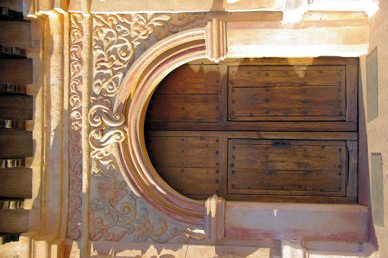
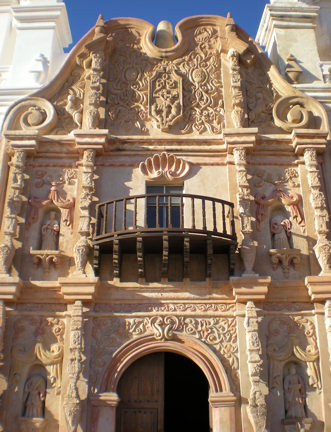 Built from 1783 – 1797, the church frequently is proclaimed to be the finest example of mission architecture in the United States. Records reveal little about the architect and artisans responsible for the original construction. Influences of Moorish, Byzantine and Late Mexican Renaissance architecture blend to create the strikingly unique edifice. We can only surmise why the east tower was never completed.
The Tohono O’odham people lived in the settlement of Bac ("place were the water appears") long before Father Kino, the Jesuit missionary and explorer, arrived in 1692. By the time the present church was built the Franciscans were in charge of the mission. Still today San Xavier del Bac serves the Tohono O’odham as a parish church within the Diocese of Tucson. Services are open to all and the church is open every day of the year.
 The building has a long history of respectful care followed by neglect and restoration. For three decades in the 1800s priests were sent home to Spain. Parishioners safeguarded church furnishings in their homes but the building fell into disuse.
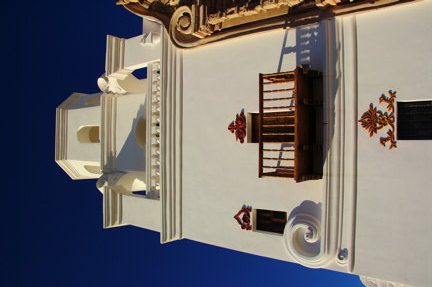
The latest restoration began with the interior in 1992, a six-year project. Once the elaborate detail of the ornate interior was completed work begun on the exterior to stabilize the walls and domes. Viewing the newly completed west tower we see the successful use of a mud plaster "recipe" used by the Tohono O’odham peoples. When baked in the Arizona sun, the coating gives a bright white finish and resists the affects of the harsh desert climate.
A museum details history of the mission and preservation work. I’m fascinated with the video showing the intricate skills required by conservators. The knowledge, patience and attention to detail are to be admired.
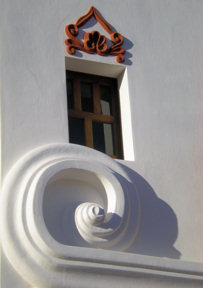
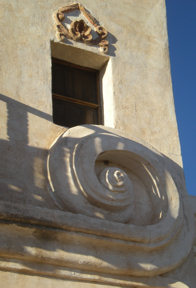
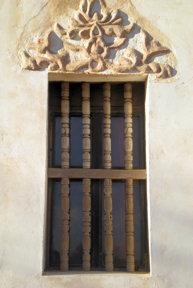
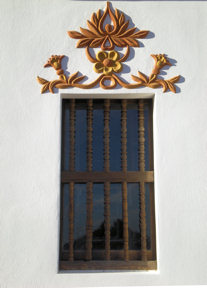
As we take photos we can’t help but compare the two towers; eroded plaster, gaping holes and faded paint of the east tower increases appreciation of the flawless renovated west tower. We can imagine how magnificent it will be when all is complete.
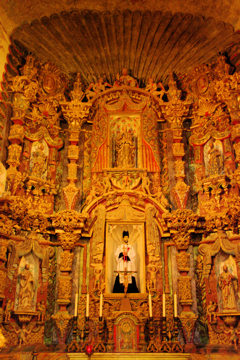
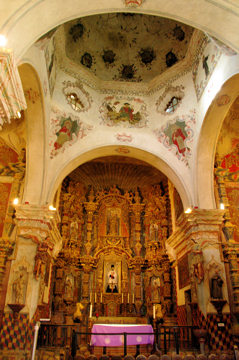 We sometimes hear the gasps of wonder as visitors step into the church for the first time. Every surface seems to resonate with color: altars, statuary, arches, retablos, frescoes, carvings. Some have called this the "Sistine Chapel of North America." It’s quite a compilation of baroque and folk art. Whether one says a prayer and lights a candle or sits quietly observing the features this is a time to pause and contemplate.
Our visit ends as the setting sun brushes the walls with flecks of gold.
When You Go: San Xavier del Bac Mission is approximately 12 miles south of Tucson, exit 92 from I-19. The church is open daily 8am-5pm, museum open 8am-4:30pm. A gift shop is open 8am-5pm every day except Easter Sunday and Christmas. Admission is free, donations gratefully accepted. Please remember this is a place of worship, be respectful.
Find It!
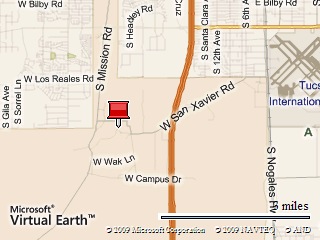
San Xavier del Bac Mission
 UA Visitor Center
 er completing all 18 they receive a “Treasure” from one of the two gift shops.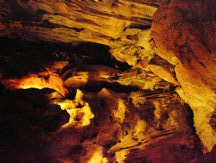
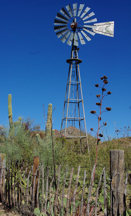 lly protected and used for research.
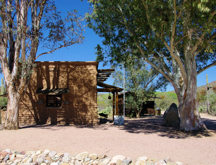 The Civilian Conservation Corps were largely responsible for development of Colossal Cave Mountain Park in the 1930s. The adobe CCC office building has been renovated, housing a museum recalling their efforts and the men who served. From developing the tour route through the cave to the limestone buildings and ramadas the CCC deserves great credit.
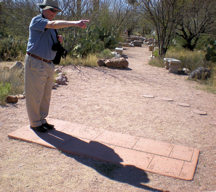 nt Hohokam Indian culture to modern cave research. I was most intrigued with the Analemmatic Sundial which I renamed the human sundial. The horizontal calendar grip is unlike any sundial I’ve ever seen. I tried to get Bob to stand still long enough to serve as the gnomon (vertical rod).
 When You Go:
 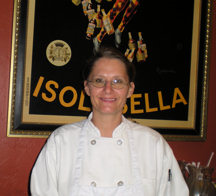 Bob was ready for a switch from Southwest cuisine so Contessa became our destination. We expected it to be nearby but drove several miles before finding the address in a rather dark, nondescript strip mall. We experienced a moment of doubt about our choice. A Pizza Hut stood in the same parking lot nearer the street, should we go there instead?
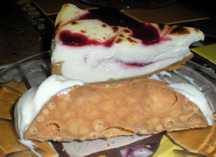 In the name of research we made selections from the enticing dessert tray, raspberry cheesecake for Bob and cannoli for me. I opted for the traditional instead of the one with chocolate chips. Bob totally enjoyed the cheesecake but one bite of my cannoli and I thought I might have to fight him off with dual forks.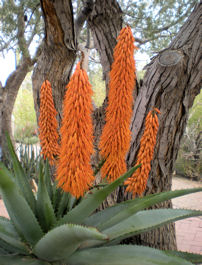
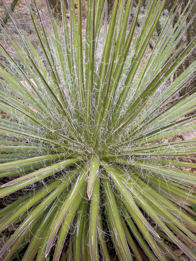

 We visited the West section of
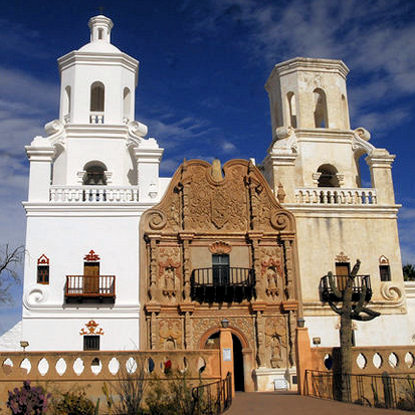 The scaffolding that encased the west tower of the historic mission church came down just in time for Christmas services. Restoration of the tower took five years and over $5 million dollars to complete. Old cement plaster was carefully removed and brick work repaired before refinishing with traditional lime plaster. Original construction began in 1783 – the oldest European-style building in Arizona. A mix of Moorish, Byzantine and late Mexican Renaissance design San Xavier del Bac is acclaimed as the finest example of mission architecture in the United States.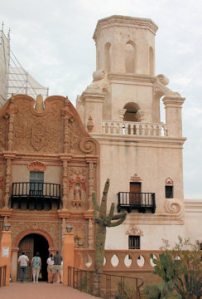
 Where To Go - Travel USA