Sneak “Peak” – Expedition Health
The first new permanent exhibit in six years opens at the Denver Museum of Nature & Science on Saturday, April 4th. Expedition Health is all about discovering the amazing, incredible YOU. “Hands-on” and “interactive” are too often used to describe any exhibit where one pushes a button. In Expedition Health these terms truly apply as visitors put their own body to work through the learning stations. The exhibit is based around the real Colorado experience of climbing 14,258′ Mount Evans.
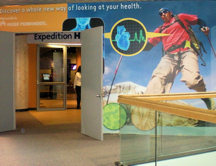 Upon entering the exhibit each person receives a Peak Pass, a plastic card activated with a few personal statistics. The computer may ask for age but it doesn’t get into the “w” word – weight. As one moves through the 20 activity stations you insert the card so that your information is added as it measures and compares. At “Your Heart’s Electricity” we grip a bar which generates an electrocardiogram and learn how the ups and downs on the EKG graph represent the activity and
  electricity of different chambers of the heart. “BioRide” takes us on a virtual bicycle ride through the Rocky Mountains with personal target heart rates and pulse measurements. “Blood Flow” illuminates the blood vessels in our hand and forearm and what happens when we press on a vessel and relieve the pressure.
Place a hand in the “cold box” to experience the effects of wind chill. As we move through the stations we learn about altitude adjustment, the “Fate of a Granola Bar” and how food is fuel for daily life and our “trek” up Mount Evans.
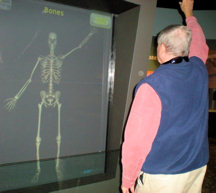 “Full Body Viewer” is sure to be constantly busy. As you approach the projection screen a skeleton appears, It mirrors your movements as you squat, wave, reach and turn. With touch controls other body systems replace the skeleton: the nervous and endocrine systems, the circulatory and respiratory system and the musculature.
We “Measure Up” by standing tall and stretching our arms straight to the side, then compare our proportions to other people of the same age. While walking down a runway at “Size Up Your Stride” a silhouette of our stride is captured on video and displayed on a projection screen along with stride 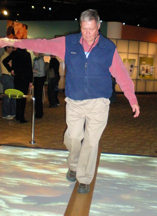 length, speed measurements and how much energy was used. Data is recorded on our Peak Pass and printed out on our Personal Profile before we exit. The learning continues at home, with the number on our printout we can enter a website and access our personal information and additional activities.
Thinking we’re taking a break we enter the “BodyTrek Theater,” however, this is participatory as well. The 12-minute program gives us an “inside” view of how the body reacts during a trek up Mount Evans. Pulse-oximeters are located in front of every seat and the audience gets a look at itself via an infrared camera. Special effects include wind, dropping temperatures and falling snow. We learn and are entertained.
At the “Summit Science Stage” we joined the captain through “Pirates of the Human Being: Meet Your Microbial Mates” – an interactive show mixing cartoon characters on monitors, live performance and audience participation. This expedition took us into the amazing microbes that live in and on the human body – good and bad. Yes, I did earn my skull and cross bones tattoo (sticker) and did not have to “walk the plank.”
“Tykes Peak” provides a mix of full body activity, dramatic play and multisensory experiences for the one- to five-year-old set. We acted like we were five with the giant pin-screen, kids are going to love it.
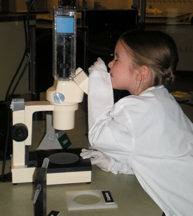 Lab coats, gloves and safety goggles gets us prepared for “Biology Base Camp,” an authentic laboratory. Using research equipment visitors test different antibacterial products on live bacteria, extract DNA and determine the sugar content of various breakfast cereals. Staff tells us that youngsters as young as five succeed with their experiments with some parental guidance. Yet, we as adults found the experiments of interest. This promises to be a popular stop along the Expedition Health journey.
Since this was a sneak peak ten days before opening some of the stations were not yet complete or were being tweaked by technicians. By all appearances everything will be up and running on opening day, April 4th. We went expecting only a walk-through but thoroughly enjoyed our ex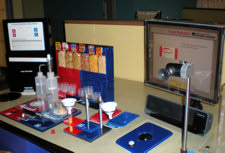 pedition.
When You Go: General admission to the Denver Museum of Nature & Science includes entrance into Expedition Health. In order to assure a quality experience at Expedition Health advance reservations are required and are available online. The museum is located at 2001 Colorado Blvd., Denver, CO. Check the website for hours and fees.
Expedition Health cost $8.7 million to develop, design and build. Kaiser Permanente is the presenting sponsor. Numerous foundations and donors made major contributions to the exhibit.
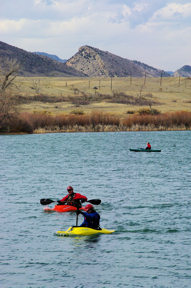 The first Saturday of spring 2009 with temps in the 70s- what other incentive do we need to get outside? A trip to
 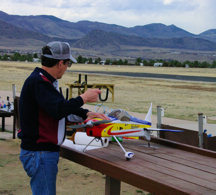 The model airfield is a unique feature at Chatfield. With wind gusts up to 33mph only one plane was in the air during our visit. However, seeing the many different designs, prop to helicopters, and watching the guys tweak their aircraft was almost as interesting as watching a flight. I’m sure it’s not a male only hobby but you wouldn’t know it by today’s “pilots”.
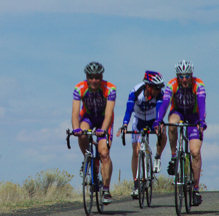 Proximityto the Denver Metro area makes Chatfield a popular recreation destination. Twelve miles of hike/bike trails in the park link with a number of connecting trails including the Colorado Trail, Centennial Trail and Highline Canal Trail. Water sports draw capacity crowds in summer: boating, swimming, water skiing, jet skiing, sailboarding and fishing.
 I want to like the
 If you’re anywhere near a
 Historic tours of Denver’s venerable Brown Palace Hotel focus on “Affairs of the Heart” during February. Oh, the tales Debra Faulkner, hotel historian and archivist, has to tell. After 117 years the “Brown” reveals stories of intrigue, romance, love triangles and even murder. Public tours are offered every Wednesday and Saturday at 2pm and last 45-60 minutes. Tours are free, however
 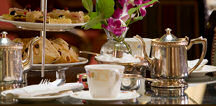 I suggest making reservations for Afternoon Tea following your tour. Served in the eight-story atrium lobby the traditional afternoon ritual includes tea sandwiches, scones with Devonshire cream shipped directly from England and tea pastries. All accompanied by a harpist or pianist.
  The doors to the


 After a tour of a nearby wildlife refuge we tried the Northfield Ling & Louie’s for lunch. A friendly greeting and immediate seating started everything off on a pleasant note. Our booth was against the wall separating the dining room from the kitchen; the top half was a frosted glass water wall. The gentle flowing water sound hid any kitchen noise. The west wall was all windows looking onto the patio and landscaped grounds.
 diced pineapple, red peppers and a sweet citrus sauce. Brown or jasmine rice accompanied both dishes. The orange flavor was very evident in my chicken nicely blended with the mild chilies, a little zip but certainly not spicy hot. I liked that the waitress brought two plates when she first approached the table, we were prepared to share. We enjoyed generous servings of both entrees and still boxed some to go.
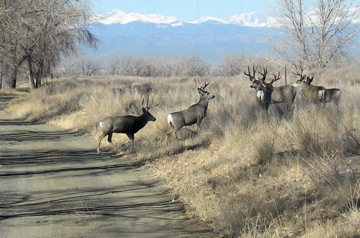 Suburbia, sports parks and traffic surround the 17,000 acres of Rocky Mountain Arsenal
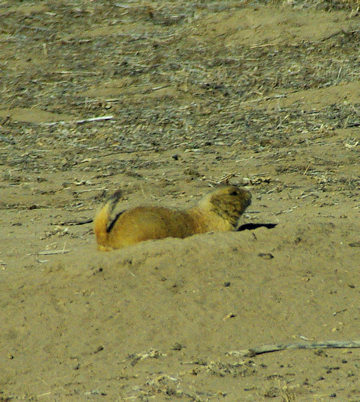
  “Wild Rides” provide the best opportunity to view and learn about the refuge inhabitants. Led by sharp-eyed and knowledgeable volunteer guides visitors ride a bus to areas normally not open to the public. We joined a tour led by Dennis aboard the brand new, heated and air conditioned bus. Returning visitors will especially appreciate the comfortable padded seats in lieu of the wooden ones on the trolley. I can’t imagine touring the refuge without seeing prairie dogs, a large number of black tailed prairie dogs scurry from burrow to burrow in colonies scattered throughout the grounds.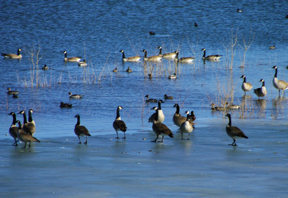
 One of eight Colorado hotels named to Travel + Leisure magazine’s “Top 500 Hotels.” This is the fourth award Denver’s
  Bring your pet with you – a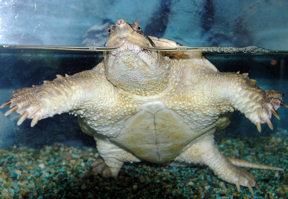
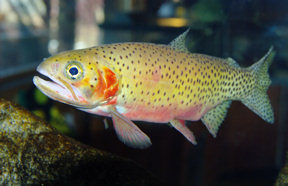
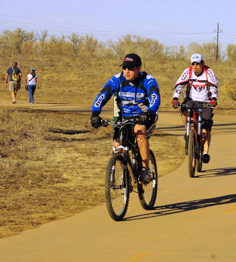 The paved Mary Carter Greenway Trail was busy with bicyclists, in-line skaters and walkers. The trail is part of the South Platte River Trail that covers 28.05 miles from Chatfield Dam to 104th Avenue in Northglenn and links to a half dozen urban trails that criss cross the Metro Area. Four miles of natural surface trails lead to lakes and a wildlife viewing blind. Five lakes and the 2.5-mile stretch of the river are open to fishing. There’s limited access to two other lakes within the park that provide water storage and wildlife habitat.
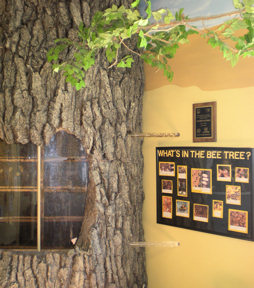
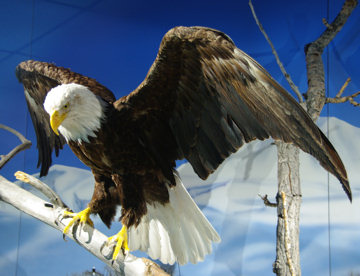
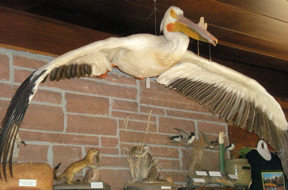
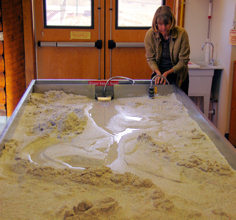 Exhibits and live animals in the Carson Nature Center provide a good orientation for budding naturalists. The water table room attracts all ages. A river channel flows through the sandy “ground,” visitors can place rocks, block houses and scrubs along the banks and watch the affects of flood waters. Some of us are old enough to remember the 1965 devastating flood along the South Platte. Rental “Explorer Packs” filled with supplies and activities are a fun way to add discovery and learning to a park visit.
 Where To Go - Travel USA