Tag Archives: Museum

Old Town Museums – Albuquerque, New Mexico

So Much to Explore!

Three outstanding facilities stand without walking distance of each other. It couldn’t be easier to explore art, history, science, technology, natural history and astronomy. Time and energy runs out before we can do it all; but, the journey proves fascinating.


Albq Museum


Albuquerque Museum of Art & History An outstanding permanent collection and excellent temporary exhibits make this a repeat experience when visiting the city. A permanent exhibit, Four Centuries, covers 400 years of history in Albuquerque. The museum’s art collection emphasizes contemporary and historic regional artists. We’ve been fortunate enough to see several quality visiting exhibits over the years. The outdoor sculpture garden presents numerous styles and genres. Guided tours of galleries and garden are available. The education department sponsors informative walking tours of Old Town.


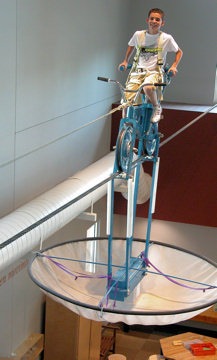
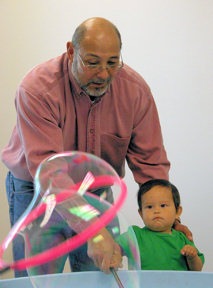
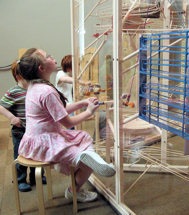
Explora! – An incredible, hands-on experience awaits learners of all ages interested in science, technology and art. Robotics lab to interactive fountain, principles of sound, motion, or electricity, this is a learning laboratory that fascinates tiny tots to senior citizens – a perfect multi-generation spot. Explora! is so popular with adults they get periodic adult-only Friday nights scheduled just for them. Visitors get so involved they spend twice as long as planned. This is truly an exception facility – a “have-to-do” while in Albuquerque.

  Explora3   Explora2Explora1


Dinosaur enthusiasts find the New Mexico Museum of Natural History & Science a must stop. We explore an ice cave, stand inside a volcano and ride the “EvolaAlb Natural History Museumtor” for a Journey Through Time, from Origins 200 million years ago to the Ice Age. Collections include the world’s longest dinosaur and oldest mammal fossil.

Within the museum, the Astronomy Center showcases a 55-foot diameter planetarium dome and high-definition imagery to explore our universe – and beyond. Permanent exhibits, Space Frontier and Making Tracks on Mars leads us through space exploration.

Wise visitors include a Dynatheater show during their touring. Sitting back to watch the giant screen presentation offers the perfect way to rest without wasting a minute. Mummies: Secrets of the Past is the current feature.

Cultural Centers – Albuquerque, New Mexico

Celebrating Cultures of New Mexico

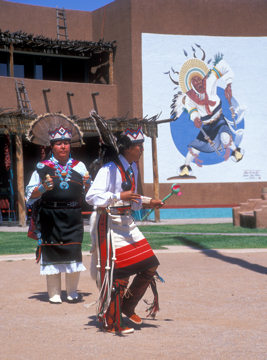
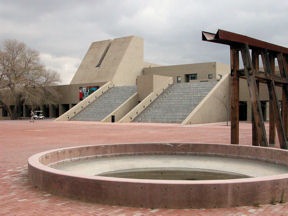
Native DancersNortheast of Old Town, the  Indian Pueblo Cultural Center entertains and educates with a hands-on children’s facility, museum, and guided tours. Drummers and dancers from New Mexico’s 19 Indian Pueblos give performances of traditional dances in the enclosed courtyard. Museum displays trace the development of each Pueblo’s culture and showcases arts and crafts distinctive to each group – a good primer before hitting the gift shops where a wide selection of authentic artwork, jewelry and pottery await selection. Breakfast and lunch menu items at the Pueblo Harvest Cafe reflect Native American and Southwestern influences. Highly recommended are the blue corn pancakes, Tiwa Taco or stone ground corn fries.

Special programming during the annual Balloon Fiesta include daily Native dance performances and demonstrations by noted Pueblo artists, Native film screenings and a frybread stand. More than 50 artists participate in the Indian Art Market October 3-4, 2009.

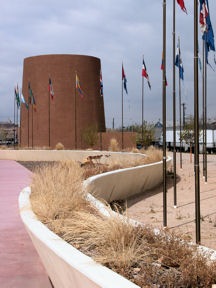
Flags at Nt. Hispanic Cener The National Hispanic Cultural Center celebrates the visual, literary, media and performing arts of the deep Hispanic roots and influences on the Southwest. The Art Museum exhibits works from the expanding permanent collection as well as themed temporary shows of traditional and contemporary art. Programming at the Roy E. Disney Center for the Performing Arts features  dance, music, theatre, storytelling, puppet shows and film. Annual fiestas and festivals in the center’s Plaza Mayor honors Hispanic holidays and cultural traditions.

Alb - Nt. Hispanic Center

The center’s La Fonda del Bosque Restaurant has been  cited as one of the country’s 50 best Hispanic restaurants. Breakfast, lunch or Sunday Brunch with live music delights diners seeking authentic regional cuisine. Weather permitting, the tree-shaded courtyard provides the perfect setting to partake of the daily buffet or order traditional favorites from the full menu.

*Travel Log* – Dubois, Wyoming – June 3, 2009

Centennial, Colorado – Dubois, Wyoming

  • We had to slow down for miles of thick fog between Fort Collins and Laramie.
  • Early June is ideal for crossing Wyoming – recent rains have turned everything green.
  • National Bighorn Sheep Interpretive Center – Dubois, worth the stop.
  • Sheri Howe – Go Togwotee Trail Public Involvement Specialist – learned about the Togwotee Trail Poject, major improvements to 38 miles of US26/287, a major and scenic route to Yellowstone and Grand Tetons National Parks.
  • Sundance Cafe – Exceptional food, chef/staff and atmosphere, loved this place.
  • Twin Pines Lodge & Cabins – #23, Kitten Creek, cozy and comfortable.

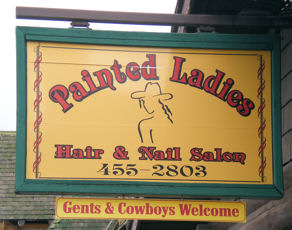
Painted Ladies


Being easily entertained I found this sign interesting. Perhaps they don’t make cowboys like they used to, can you imagine John Wayne being caught at the Painted Ladies Salon?

Celebrating 150 Years – Colorado’s Gold Rush

Celebrate Colorado’s 1859 Gold Rush

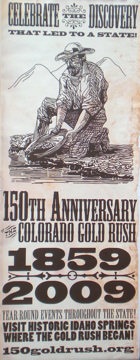
Gold Rush 150 Banner Communities throughout Colorado plan festivities and special events to celebrate the sesquicentennial of the Colorado gold rush. With the slogan, “Pikes Peak or Bust!” thousands of prospectors headed to the hills of the Kansas Territory to strike it rich. Central City had a population of 60,000 by 1860. Golden, Denver and Boulder were fast becoming major supply and transportation points.

The rapid growth led to the creation of the Colorado Territory in 1861 and statehood in 1876.

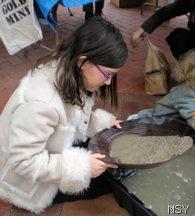
One of the 2009 kick-off events was held in Denver Saturday, May 2 at the Governor’s Residence as part of the First Saturday: Free Family Day series. Gilpin County, Blackhawk, Central City, Golden, Idaho Springs, the Molly Brown House Museum and the Clear Creek County Metal Mining Association entertained and shared plans for continuing celebrations.Gold Panner

  • Clear Creek Railroading & Mining Days is scheduled for May 23-24 in Georgetown.
  • Golden plans a huge party June 12 beginning at 6:30pm including a parade, music and laser light show.
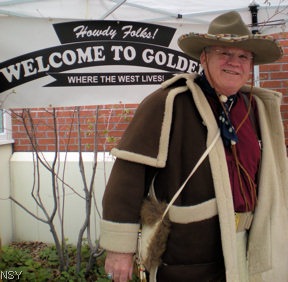
  • Summertime events in Gilpin County range from Mountain Man and Mining Weekends to High Tea and a Cemetery Crawl.Golden Man
  • The 4th of July will see Boulder celebrating at numerous venues.
  • What better place to gain a perspective than the National Mining Hall of Fame & Museum in Leadville?
  • “All That Gold Can Buy” Denver’s Mineral Millionaires exhibit at the Molly Brown House Museum – May 19 – October 4.
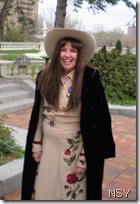
  • Breckenridge has designated August Annie Oakley8-9 as the Breck150 Grand Celebration. Beginning the day will be the extraction and opening of the time capsule placed in the cornerstone of the Summit County Courthouse on July 31, 1909. Music, kid’s events, interactive activities fill the day until the grand finale fireworks display.
  • Visitors to businesses in Idaho  Springs have an opportunity to win real gold in the months of June and October.

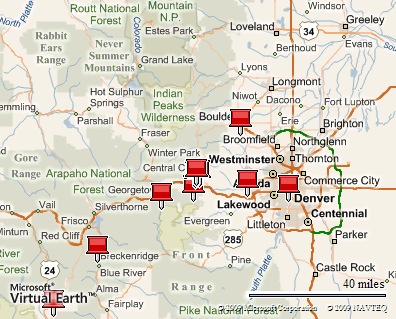
Choose an event or follow The Colorado Gold Trail to join in the Gold Rush celebrations.

Find It!

Colorado
Colorado

Governor’s Show – Loveland Museum/Gallery – Loveland, Colorado

2009 Governor’s Invitational Art Show and Sale

governors-show-logo-miniThe 18th annual Colorado Governor’s Art Show fills the galleries at Loveland Museum/Gallery through May 17, 2009. Featured are the works of 56 of Colorado’s finest painters and sculptors. The show is staged by the Thompson Valley Rotary and Loveland Rotary Clubs with proceeds used for Rotary projects in Larimer County. All works – watercolors, pastels, acrylics, oils, mixed media and sculpture – are for sale.

Show director, Judy Archibald says, "The governor’s show offers an excellent opportunity for collectors to view works by some of the best and brightest artistic talents." Paintings by Kit Hevron Mahoney, Quang Ho, Michael Untiedt are annual favorites. A large number of sculptors make the Loveland area home. Locals George Lundeen, Rosetta, George Walbye and Fritz White are among the 15 represented in this year’s show.

The show is open Tuesday – Friday 10am-5pm, Thursday evening until 9pm, Saturday 10am-4pm and Sunday noon – 4pm. No admission fee is charge; you can support the show by purchasing the full-color catalog, raffle tickets and, of course, the art. Donations gratefully accepted.

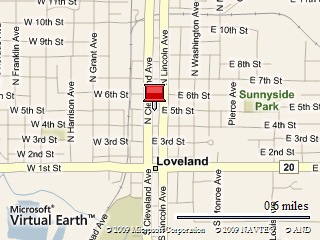
The Loveland Museum/Gallery is located at Lincoln Avenue (Northbound US287) and 5th Street in downtown Loveland, Colorado.

Nancy’s Notes: You’ll find sculpture in publics places throughout the Loveland community – "Mighty Casey" by Mark Lundeen at the Barnes Softball Complex, in front of businesses and firehouses, in parks and the civic center. A trip to Loveland should include a search for sculpture. Benson Park Sculpture Garden at 29th and Beech Drive exhibits the highest concentration with over 100 permanent installations. Studios, galleries and foundries further the visitor’s art experience.

My favorite lunch site in Loveland is Schmidt’s Bakery & Deli at 808 14th SW. Don’t leave without something from the bakery – a sweet treat.

Find It!

Loveland Museum/Gallery

Las Cruces, New Mexico

Visit Las Cruces

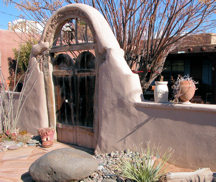
las-cruces-gate-in-adobe-wallThere’s plenty to do in the Las Cruces area to warrant several days in the area. Las Cruces ranks as the second largest city in New Mexico – yes, larger than Santa Fe – and home to New Mexico State University. You’l lfind an active art scene for both visual and performing arts. Numerous publications and organizations have pronounced Las Cruces a "Dream Town" for retirement and one of the best college towns for retirement. Golf courses and a purported 350 days a year of sunshine add to the appeal.

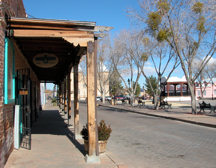
las-cruces-old-mesillaThe town lies west of the Organ Mountains along the Rio Grande River. White Sands National Monument is 45 miles east. Historic Old Mesilla, once a major trading center, is a popular destination with shops and restaurants around a public plaza. Fort Selden State Monument and nearby ghost towns attract history buffs. Don’t overlook  the New Mexico Farm and Ranch Heritage Museum – definitely worth a stop.

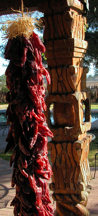
las-cruces-chilesLocated in the center of the heart of chile-growing country we find delicious, authentic Mexican food. Many family owned restaurants use recipes handed down for generations. Especially on weekends, dinner may be accompanied by a live mariachi band. Several wineries welcome visitors to tasting rooms and wine festivals.  Then there’s my favorite – Stahmann Farms for gourmet pecans.

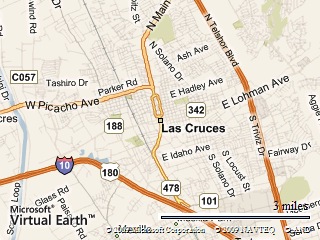
Las Cruses is located in southern New Mexico at the junction of I-25 and I-10, 38 miles west of El Paso, Texas.

Find It!

Las Cruces, New Mexico

Salinas Pueblo Missions National Monument – New Mexico

Windows to an Ancient World
 spmnm-window-at-abo1

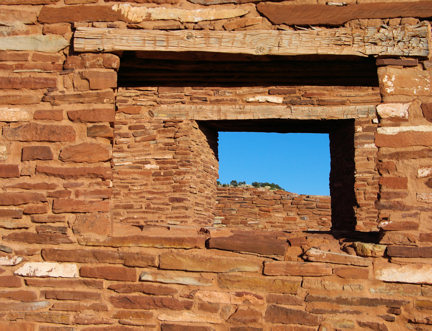
We stand in the afternoon light peering through window after window into the remains of an ancient world at Abo Ruins. The walls stand silent today but we can imagine the sounds reverberating through the village as women ground corn, masons shaped stones and children chased wild turkeys through the courtyard.

In today’s sparsely populated Estancia Basin of central New Mexico evidence of great pueblos recall a time when thousands lived in the valley. Clovis people hunted here 10,000 years ago. As prehistoric populations learned to grow corn they began to stay in one location longer, living in pithouses.
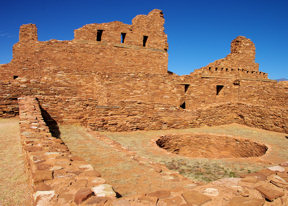
spmnm-abo-ruins1

Mission walls and kiva at Abo Ruins reflect the blending of Indian and Spanish missionary cultures.

Mesa Verde in southern Colorado was once the center of Anasazi culture. After abandonment of Mesa Verde circa 1300 some groups from that culture moved south along the Rio Grande and into the Estancia Basin. Stone villages and towns were built, fields farmed, trade flourished. Salt was collected from nearby lake beds, the commodity used for trade with plains Indians and other pueblos, such as Zuni 200-miles to the west.

In 1598 Spanish explorers entered the area, within the next 20 years missions were established in most of the Rio Grande pueblos. Fransican priests directed the building of churches and conventos, each larger and grander than the previous one. Cultural conflict, Apache raids, disease, drought and famine ensued. The entire Salinas district was deserted by both Indian and Spanish populations by 1677.

spmnm-view-from-abo

View from Abo Ruins

Three missions and portions of their villages comprise the Salinas Pueblo Missions National Monument. We’d passed through Mountainair, New Mexico on several previous trips only slightly aware of the missions. This time we stopped at the small in-town visitors center. A video and museum displays gave background information, piquing our interest in visiting the three sites: Quarai, Abo and Gran Quivira (Las Humanas).
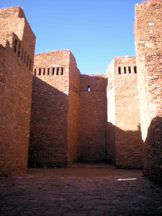
spmnm-quarai-mission-walls1

Interior of Quarai Mission

Quarai

Stepping through the entryway to the old stone mission church at Quarai I’m struck by the walls towering nearly 40-feet  high centuries after the last villager departed. Imagine the effort and engineering required to construct this grand church, the largest church of the Salinas Province as the Spanish called the region. The stones beneath our feet are believed to be from the original flagstone floor, an unusual feature since most mission church floors were packed earth at that time.

spmnm-church-quarai1

Quarai Mission


The mission at Quarai was built in the shape of a cross with side altars and a choir loft. Rows of empty sockets once held vigas, or roof beams; today we look up to open blue sky. We can imagine how imposing this structure seemed to the pueblo people use to living in small, low rooms.

Along a half-mile trail we see mounds signifying unexcavated house blocks, evidence of the 400-600 people living here before the Spaniards. After winding through the mission ruins the trail leads to the spring and stream that provided water essential for the community and fields. Giant cottonwoods shade the stream banks.

spmnm-abo-21

Abo Ruins

Abo

We arrive at Abo in the late afternoon, the low angle of the sun warming the red sandstone walls. The stone found at Abo broke easily into horizontal pieces. There’s more symmetry here than we see at the other two sites; row upon row, mortar of clay and water holds the tabular blocks together.

What strikes me at Abo is the sense of the convento – dining room, kitchen, storerooms, residence cells where the friars lived, porteria, stables and corral. This is where much of the business of the mission occurred. We don’t view these rooms from afar – the interpretive trail leads us along convento passageways and through waist-high doorways.
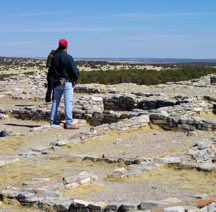
spmnm-view-from-gran-quivira-ruins

Mesa top ruins at Gran Quivira

Gran Quivira (Las Humanas)

We were so inspired by our stops at Quarai and Abo the next morning we decided to put Gran Quivira on the agenda. Called Las Humanas by Spanish explorers, Gran Quivira was the largest of the Salinas pueblos. Once home to as many as 2,000 people, today it is the most remote. From Mountainair we travel 25 miles southeast. Unlike the other two pueblos, Gran Quivira sits atop a mesa with no immediate water source. Runoff from sporadic rains was trapped in shallow pits to supplemented the limited water from wells and roof-fed cisterns.

spmnm-gran-quivira-overview

Gran Quivira Mound 7 and Church

As we approach the ruins we realize they are much larger than those we’ve seen at Abo and Quarai. Yet, Mound 7 is only excavated one of 20 house blocks that once stood at Las Humanas. The square-room ruins we walk through were constructed between 1550-1670, stones held together with an ashy-colored mortar. Beneath these walls archaeologists uncovered 200 wedge-shaped rooms arranged in five to six concentric circles built around a grand kiva. Yellow caliche mortar was used to construct this pueblo in the 14th century. We can stand atop the later pueblo and peer down a shaft into the lower rooms.
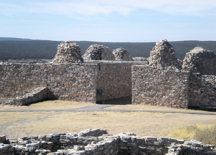
spmnm-gran-quivira-church-n

Unfinished second church at Gran Quivira

Construction on the first Las Humanas mission church began in 1630. The pueblo did not always have a resident priest, instead it was a circuit parish served by clergy from Abo. A second church was begun around 1659, the ambitious cross-shaped sanctuary never saw completion.

The museum at Gran Quivira exhibits examples of the various pottery styles used in the pueblos through the centuries.

Reflecting on our Salinas Pueblo Missions tour we realize that these churches were built, used for worship and totally deserted nearly a century before the first of the famed California missions was established. We’ve had the opportunity to see into an ancient world.

spmnm-grinding-stoneWhen You Go: Salinas Pueblo Missions National Monument is open daily except Thanksgiving, Christmas and New Years. The monument visitor center is in Mountainair, New Mexico. From Mountainair Abo is 9 miles southwest, Quarai is 8 miles northwest and Gran Quivira 25 miles southeast. Each of the three sites have a small visitor center and picnic areas. Camping is not allowed; campgrounds can be found in the nearby Cibola National Forest.
University of Arizona – Tucson, Arizona

Travel Destination – Campus Bound

I’ve long been an advocate of university and college campuses as rich resources for travelers. Some of the best art, historic and earth science collections are held by higher education institutes. The University of Arizona in Tucson perfectly illustrates my hypothesis.

University of Arizona Campus Highlights

  • arizona-t-shirt-logoUA Visitor Center– Campus information center, weekly guided tours, ticket sales for UApresents, parking. Open Monday – Friday 9am-5pm.
  • Arizona State Museum – Oldest and largest anthropology museum in the Southwest, Smithsonian Institution affiliate, world’s largest collection of Southwest Indian pottery, permanent and temporary exhibits, gift shop. The Paths of Life permanent exhibition showcases the origins, history and culture of American Indians of the Southwest with artifacts, historic items, artwork, videos and dioramas. Open Monday – Saturday 10am-5pm, Sunday noon-5pm. Closed state and national holidays. Suggested donation $3.
  • Center for Creative Photography – Museum, research center and photo archives, rotating exhibits. Established by Ansel Adams and UA, holds more archives and individual works by 20-th century North American photographers than in any other museum in the US. Gallery Store offers a large selection of photography related titles. Open Monday – Friday 9am-5pm, Saturday & Sunday 1-4pm, closed major holidays. Free admission, suggested donation.
  • Flandrau: The UA Science Center– Hands-on exhibits, planetarium and observatory for public viewing of night skies. Check website for hours and programs, admission fee, night telescope viewing free.
  • The Jim Click Hall of Champions – The heritage and traditions of athletics at the university showcasing student athletes and coaches. Hours vary, free admission.
  • The University of Arizona Museum of Art – Wide-ranging collections of European and American fine art from the Renaissance to contemporary. Changing exhibits and highlights from the permanent collections. Open Tuesday – Friday 9am-5pm, Saturday & Sunday 1-4pm, closed university holidays. Adult admission $5.

 UA Unique

  • SOML – Stewart Observatory Mirror Lab – Tours give a behind the scenes look at cutting-edge optical technology and spin-casting processes used in making giant telescope mirrors. Tours on Tuesday and Friday, reservations required, cost $15/person.

More on UA Campus

  • Campus Arboretum – Pick up a map and enjoy a campus walk among the unique collection of trees, shrubs and plants from arid and semi-arid climates. Free.
  • Performing Arts – Theatre, dance and music performances and film screenings staged throughout the year. Admission fees required.
  • Sonett Visitor Center– Self-guided tour at the Lunar and Planetary Laboratory – HiRISE Mars camera, the Phoenix Mars Lander and the Cassini mission to Saturn. Free, 520-626-7432.
  • UA Bookstore– I once heard someone espouse if you want your child to go to a particular university, as a pre-teen take them to the campus and buy them a sweatshirt. All sorts of insignia apparel and gifts are available at the official bookstore in the Student Union Memorial Center. 
  • UA Library Special Collections – Collections of rare books and archival materials in many subject areas including Arizona and the Southwest, changing exhibits.
  • UA Mineral Museum– Fabulous collection of minerals, gemstones and meteorites from around the world – over 2,000 on display. Located on the lower level of Flandrau: The UA Science Center. Check website for fees and hours.
  • UApresents – Professional performing arts – classical, jazz, blues and world music events plus dance performances. Admission fees.

UA off Campus

  • Biosphere 2– Management of the living laboratory of global scientific issues is now under management of the University of Arizona. Tours at the complex 20 minutes north of Tucson. Fee.

  • Boyce Thompson Arboretum – Plants from the earth’s varied deserts alongside unspoiled examples of Sonoran Desert vegetation. The Southwest’s oldest arboretum and botanical garden is located near Superior, 90 minutes from Tucson. Fee.

  • UA SkyCenter– Observatories atop Mt. Lemmon, SkyNights, DiscoveryDays and SkyCamps open to the public by reservation. Located 90 minutes north of Tucson. Fee.

Adjacent to Campus

  •  Arizona History Museum– Focus on southern Arizona history – Spanish colonial through territorial eras. Mining and transportation featured exhibits. Not part of the University but worth visiting while in the campus neighborhood. Check website for current hours and fees.

This list doesn’t begin to include all the possibilities, pick up a University of Arizona Visitor Guide and follow your interest from cutting-edge science to sport competitions. Be campus bound in Tucson.

Casa Grande National Monument – Casa Grande, Arizona

America’s First Archaeological Reserve

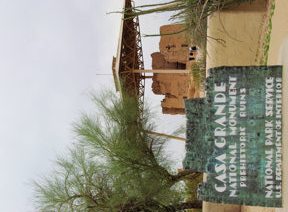
Arizona’s casa-grande-with-sign3Casa Grande National Monument preserves the remains of structures built by the Hohokam people in the 1300s. In the Gila River Valley these ancient people built over 1,000 miles of  irrigation canals, successfully growing corn, beans, squash, cotton and tobacco. Today several Native American tribes believe they have ancestral links to the Hohokam. The O’odham people of Southern Arizona still use the ruins for ceremonials and special events.

Spanish missionary, Father Kino, rode through the valley in 1694 and refered to the deserted structure as Casa Grande, or Great House, in his records. The site became the nation’s first archeological reserve in 1892 – the fifth oldest unit in the National Park system. Casa Grande was designated a National Monument in 1918.

We watch a 15-minute film and browse the compact but informative museum relating background on the Hohokam people and Casa Grande before taking the short walk out to the ruins. The largest structure – four stories and 11 rooms – has a metal roof protecting the ancient walls from weather damage. Signs along the self-guided path relate informative details.

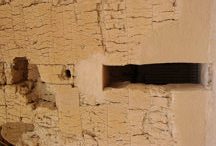
casa-grande-doorway1Unlike most of the ruins we see in the Southwest Casa Grande was not built with stone or adobe bricks. Caliche is a concrete-like hardpan found several feet below the surface in this region. The Hohokam mixed ground-up calice wth water to procude a sticky mud for building walls, sealing roofs and plastering walls.

No one knows why the unusual structure was built or how it was used – center of government, education, religion or trade are speculations. I’m fascinated with how architectual details signify astronomical occurances. A small circular window in the west wall aligns with the setting sun on the summer solstice. A square hole in an upper wall aligns once every 18.5 years with the setting moon at an extreme point in its cycle. Additional windows and doorways align with the sun or moon at significant times of the year. Was this an observatory? We believe the Hohokam devised a calendar based on the motions of the sun and moon and incorportated that calendar into their architecture. Did it relate to their crops and farming?casa-grande-big-house2

Casa Grande was part of a much larger community. Excavated walls and unearthed mounds indicate several compounds comprised of houses, work areas, courtyards and storage rooms. In the center of the compound an oval ballcourt was used for community activities.

We don’t know the reasons Casa Grande was abandoned – disease, drought, flood, social or political issues. By 1450 the Hohokam culture, that had lasted 1,000 years, had come to an end. Today agriculture is still key to the region; irrigated casa-grande-cotton1fields support Arizona’s cotton industry. Standing in the shadow of the ancient walls and gazing across wind-blown fields one is almost transported into a world as the Hohokam knew it.
When You Go: Casa Grande National Monument is open 8am-5pm every day of the year except Thanksgiving and Christmas. The monument is located in Coolidge, Arizona about an hour’s drive from both Phoenix and Tucson.

Expedition Health – Denver Museum of Nature & Science – Denver, Colorado

Sneak “Peak” – Expedition Health

The first new permanent exhibit in six years opens at the Denver Museum of Nature & Science on Saturday, April 4th. Expedition Health is all about discovering the amazing, incredible YOU. “Hands-on” and “interactive” are too often used to  describe any exhibit where one pushes a button. In Expedition Health these terms truly apply as visitors put their own body to work through the learning stations. The exhibit is based around the real Colorado experience of climbing 14,258′ Mount Evans.

eh-entryUpon entering the exhibit each person receives a Peak Pass, a plastic card activated with a few personal statistics. The computer may ask for age but it doesn’t get into the “w” word – weight. As one moves through the 20 activity stations you insert the card so that your information is added as it measures and compares. At “Your Heart’s Electricity” we grip a bar which generates an electrocardiogram and learn how the ups and downs on the EKG graph represent the activity and eh-blood-vessels1electricity of different chambers of the heart. “BioRide” takes us on a virtual bicycle ride through the Rocky Mountains with personal target heart rates and pulse measurements. “Blood Flow” illuminates the blood vessels in our hand and forearm and what happens when we press on a vessel and relieve the pressure.
Place a hand in the “cold box” to experience the effects of wind chill. As we move through the stations we learn about altitude adjustment, the “Fate of a Granola Bar” and how food is fuel for daily life and our “trek” up Mount Evans.

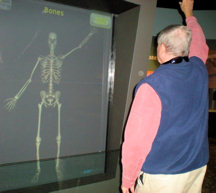
eh-movement-bones“Full Body Viewer” is sure to be constantly busy. As you approach the projection screen a skeleton appears, It mirrors your movements as you squat, wave, reach and turn. With touch controls other body systems replace the skeleton: the nervous and endocrine systems, the circulatory and respiratory system and the musculature.
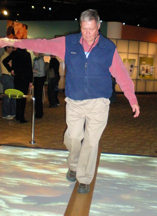
We “Measure Up” by standing tall and stretching our arms straight to the side, then compare our proportions to other people of the same age. While walking down a runway at “Size Up Your Stride” a silhouette of our stride is captured on video and displayed on a projection screen along with stride eh-crossing-the-riverlength, speed measurements and how much energy was used. Data is recorded on our Peak Pass and printed out on our Personal Profile before we exit. The learning continues at home, with the number on our printout we can enter a website and access our personal information and additional activities.
Thinking we’re taking a break we enter the “BodyTrek Theater,” however, this is participatory as well. The 12-minute program gives us an “inside” view of how the body reacts during a trek up Mount Evans. Pulse-oximeters are located in front of every seat and the audience gets a look at itself via an infrared camera. Special effects include wind, dropping temperatures and falling snow. We learn and are entertained.

At the “Summit Science Stage” we joined the captain through “Pirates of the Human Being: Meet Your Microbial Mates” – an interactive show mixing cartoon characters on monitors, live performance and audience participation. This expedition took us into the amazing microbes that live in and on the human body – good and bad. Yes, I did earn my skull and cross bones tattoo (sticker) and did not have to “walk the plank.”

“Tykes Peak” provides a mix of full body activity, dramatic play and multisensory experiences for the one- to five-year-old set. We acted like we were five with the giant pin-screen, kids are going to love it.

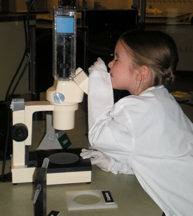
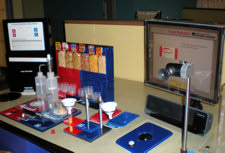
eh-in-the-labLab coats, gloves and safety goggles gets us prepared for “Biology Base Camp,” an authentic laboratory. Using research equipment visitors test different antibacterial products on live bacteria, extract DNA and determine the sugar content of various breakfast cereals. Staff tells us that youngsters as young as five succeed with their experiments with some parental guidance. Yet, we as adults found the experiments of interest. This promises to be a popular stop along the Expedition Health journey.
Since this was a sneak peak ten days before opening some of the stations were not yet complete or were being tweaked by technicians. By all appearances everything will be up and running on opening day, April 4th. We went expecting only a walk-through but thoroughly enjoyed our exeh-labpedition.

When You Go: General admission to the Denver Museum of Nature & Science includes entrance into Expedition Health. In order to assure a quality experience at Expedition Health advance reservations are required and are available online. The museum is located at 2001 Colorado Blvd., Denver, CO. Check the website for hours and fees.

Expedition Health cost $8.7 million to develop, design and build. Kaiser Permanente is the presenting sponsor. Numerous foundations and donors made major contributions to the exhibit.